
Yes, you can get married in Denmark even if neither of you lives there. First, Familieretshuset, the Danish Agency of Family Law, checks your application; with the approval you marry in a municipality. Below are the questions couples ask us most often, answered briefly and with the matching guide. As of 3 November 2026.
Requirements
Can we get married in Denmark if neither of us lives there?
Yes. Denmark requires neither residence nor a minimum stay. You apply online to Familieretshuset for the marriage approval, in Danish prøvelsesattest, and then marry in a municipality of your choice. Only if you are both citizens of a Nordic country does everything go through the municipality. More in our guide Marrying without residence.
Which requirements do we have to meet?
You must both be at least 18 and unmarried; any previous marriage must have ended, and you must not be closely related (Ægteskabsbetingelser). On the wedding day you must also be legally in Denmark. Whether this fits your situation is shown by our free eligibility check.
Can two foreigners or a binational couple get married?
Yes, both. Even two partners without an EU passport can marry in Denmark. For a partner without an EU passport, what matters most is legal stay and the country their documents come from; the rules for around 198 nationalities are on our page Getting married by country of origin.
Can same-sex couples get married in Denmark?
Yes, since 2012, under the same rules as all couples. Germany has recognised the marriage as a marriage since 2017, Austria since 2019 and Switzerland since 1 July 2022. More in our guide Same-sex marriage in Denmark.
Is it possible with a German "Duldung", during an asylum procedure or with refugee status?
With a Duldung (tolerated stay) or during an ongoing asylum procedure, usually not, because neither allows legal entry into Denmark. Anyone recognised as a refugee who holds a residence permit from a Schengen state and a valid travel document usually meets the residence requirement; the hurdle is then often missing documents. Because it depends on the individual case, get legal advice if in doubt. More in our guides Marrying with a Duldung and Marrying with refugee status.
Is a Danish wedding a loophole?
No. Familieretshuset decides under the Danish Marriage Act, checks every couple against the same criteria and, if in doubt, can ask about your relationship, up to an interview. What is checked is explained in our guide Proof of relationship and sham marriage checks.
Documents
Which documents do we need?
Basically your passports, for EU citizens also the national ID card, and the online application. Depending on your case, add: the divorce decree or the former spouse's death certificate, birth certificates of joint children, proof of residence if you live together outside Denmark, and proof of legal stay for partners without an EU passport. The full list is in our guide Documents 2026.
Do we need a certificate of no impediment or a certificate of marital status?
Denmark does not require a certificate of no impediment. Familieretshuset only asks for a certificate of marital status if it sees a specific need in your case; otherwise you confirm with your signature, under criminal liability, that you are unmarried. More in our guides Marrying without a certificate of no impediment and Certificate of marital status.
Do we need our birth certificates?
No. Familieretshuset only requires the birth certificates of joint children, not your own. More in our guide Getting married without a birth certificate.
What do divorced or widowed partners need?
Divorced partners need the divorce decree; in practice Familieretshuset asks for the note confirming that it is final. Widowed partners need the former spouse's death certificate. Whether an apostille and a translation are needed depends on the issuing country. More in our guides Remarrying after divorce and Remarrying after being widowed.
What are the passport requirements?
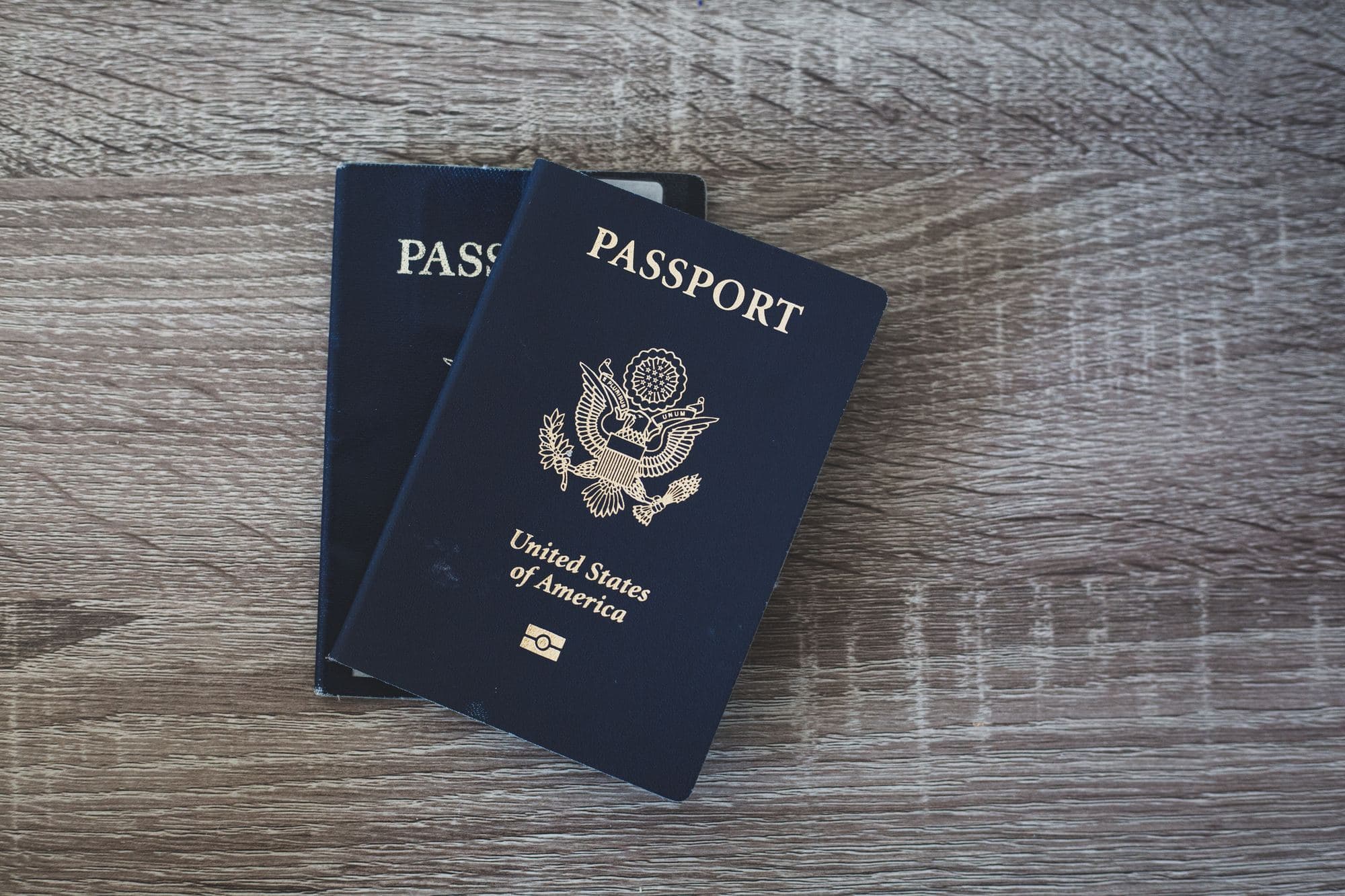
A passport from outside the EU must be valid for at least three months beyond the planned departure, have two blank pages and have been issued within the last ten years (Lovligt ophold). Familieretshuset wants good colour photos of all pages, including the blank ones. If the passport expires earlier than four months after the approval, the approval is valid for correspondingly less time.
Apostille and translation
Do our documents need an apostille?
Documents from Germany, Austria, Switzerland and almost all of Europe need neither an apostille nor legalisation for Denmark, and neither do documents from the US, Canada, Australia, New Zealand and Türkiye (Krav til dokumentation). Documents from many other countries need an apostille. What counts is the country that issued the document; every country is in our apostille or legalisation country list.
What applies to countries without an apostille?
If the issuing country has not joined the Apostille Convention, the document must be legalised: first by the country's foreign ministry, then by the competent Danish embassy. For nine countries, including Pakistan and Bangladesh, Familieretshuset decides case by case. How to obtain an apostille is shown in our apostille guide.
Which documents must be translated, and by whom?
Documents not in Danish, English or German must be translated into one of these languages by an authorised translator, including the apostille, and before you apply. Your passport does not need a translation. More in our guide Certified translations.
Timing
How long does it take overall until the wedding?
With complete documents, usually three to six weeks, depending on the municipality. The approval often comes quickly; the bottleneck is the date at the municipality, and in Copenhagen the city states a wait of up to four months. More in our guide Waiting times 2026.
How quickly does Familieretshuset decide?
Complete applications usually within 5 working days, if you meet the requirements (Sagsbehandlingstider). Both parts of the application must arrive within 14 days, otherwise Familieretshuset closes the case and you pay again. More in our guide Familieretshuset explained.
What happens if documents are missing?
Then Familieretshuset asks for them, and the application moves into a separate queue: as of 3 November 2026, it is working there on cases received in August 2026. What you can do then is in our guide Request for documents or refusal.
How long is the approval valid?
Four months from issue, shorter if a passport, visa or residence permit expires earlier. If it expires before the wedding, you need a new application with all documents and pay the fee again. More in our guide Prøvelsesattest.
Is a same-day or express wedding possible?
Not on the same day: first Familieretshuset checks, then the municipality gives out the date. There is no official fast track; things go faster with complete documents and a municipality that has dates soon. We offer Express on request, but nobody can promise a specific day (Fast wedding 2026).
Costs
What does the application to Familieretshuset cost?
DKK 2,100 per couple, about €281 (as of 2026). You pay when you submit the application, and Familieretshuset does not refund the fee, not even if the application is refused or you do not marry (Ansøg om prøvelsesattest).
Does the ceremony at the town hall cost anything?
No, there is no fee for the ceremony at the town hall. Copenhagen, which used to charge for some ceremonies, has not charged since August 2025, after its own legal review found no basis for it. Costs can only arise for a place of your choice outside the town hall. What else changed in 2025 and 2026 is in our overview What's new in 2026.
What total costs should we expect?
The only mandatory item is Familieretshuset's fee. Depending on your case, add travel and accommodation, apostilles, translations and, if you want one, an agency. Example calculations are in our cost comparison 2026.
Places and dates
Can we choose the municipality?
Yes, any municipality that marries couples who are not resident in Denmark. You name it in the application, and the approval applies to that municipality. Each municipality sets its own wedding days, witnesses and language; the rules of many municipalities are on our page Wedding venues and rules.
When do we get our wedding date?
Only after the approval: Familieretshuset sends it to your municipality, and then you arrange the date there. How far ahead dates are given out varies; Tønder and Aabenraa, for example, release them 60 days in advance. Familieretshuset advises checking which municipalities still give out dates before you apply.
What if our municipality has no date left?
Then Familieretshuset can forward the approval to another municipality. You do not need a new application, but the four months are not extended. Your options are explained in our guide Approved but no date; we handle the switch as a change of municipality for €149.99.
Can we get married on a Saturday or on the beach?
Yes, but not everywhere. Copenhagen and Kolding, for example, hold Saturday ceremonies, Kolding only with your own witnesses; on the beach, for example in Aabenraa, also only with your own witnesses. Outside the town hall, extra costs may apply. More in our guide Saturday or beach weddings.
Can the ceremony be held in German?
Yes: Tønder, Aabenraa, Haderslev, Kolding and Copenhagen also hold ceremonies in German, otherwise in English or Danish. If one of you does not understand the language of the ceremony, you need an interpreter (Interpreter at the ceremony).
Visa and residence
Does my partner need a visa for the wedding?
Not with a passport from the EU, the EEA or Switzerland. Everyone else must be legally in Denmark on the wedding day: depending on nationality visa-free, with a Schengen visa, including a tourist visa, or with a residence permit from a Schengen state. More in our guide Marrying on a Schengen visa.
Which proof of legal stay does Familieretshuset require since the EES?
For entries or exits after 10 April 2026: a printout of the data page and the result page of the EES visa calculator plus the plane tickets or boarding passes, and the visa sticker if a visa is required. A residence permit from a Schengen state is enough on its own. Step by step in our guide EES proof.
Can my partner stay in Germany after the wedding?
Not automatically: the wedding does not change anyone's residence status. A partner without an EU passport usually needs a family reunification visa to live in Germany, applied for at the German mission abroad and usually with German at level A1. More in our guide Family reunification.
The ceremony
Do we both have to be there in person?
Yes, for the ceremony you must both stand before the registrar in person. Everything before that, from the application to arranging the date, is done online. Why an online ceremony is no substitute is explained in our guide Online wedding or Denmark.
Do we need witnesses?
Yes, two. Many municipalities provide them free of charge on weekdays, but not always: Tønder only in the mornings, Aabenraa Monday to Thursday, Copenhagen always at City Hall. On Saturdays and at special places, many municipalities require your own witnesses (Witnesses in Denmark).
How does the ceremony work, and how long does it take?
Allow 15 to 20 minutes: a short speech, your "I do", an exchange of rings if you wish, then you, the witnesses and the registrar sign. Guests are welcome; how many is up to the municipality, and Copenhagen allows up to 75. More in our guide The ceremony step by step.
Do we get the marriage certificate straight away?
Yes. Right after the ceremony you receive two international marriage certificates in five languages: Danish, German, English, French and Spanish. More in our guide International marriage certificate.
Recognition in Germany, Austria and Switzerland
Is the marriage recognised in Germany?
As a rule, yes: the form follows Danish law, the conditions for marriage the home law of each partner (Articles 11 and 13 of the German Introductory Act to the Civil Code, EGBGB). Thanks to EU Regulation 2016/1191, the multilingual certificate needs no apostille, and registering the marriage in Germany is optional. If a previous marriage was dissolved outside the EU, that divorce usually has to be recognised first under § 107 FamFG (Recognition in Germany).
What do couples in Austria have to do?
In Austria, entering the marriage in the Central Civil Status Register (ZPR) is mandatory. The Danish certificate needs no apostille for this. More in our guide Recognition in Austria.
And in Switzerland?
The marriage is not registered automatically: you report it through the Regional Consular Centre in Stockholm, from where it goes to the canton and into the Infostar register. The leaflet asks for the original certificate, no older than six months, and does not mention an apostille; allow at least two months (Recognition in Switzerland).
After the wedding
Does the Danish marriage certificate need an apostille?
Not for Germany and Austria. If another authority asks for one, only the Danish Ministry of Foreign Affairs issues it: DKK 250 per certificate, about 5 to 7 working days by post. We obtain it as an add-on for €149.99 (Apostille on the marriage certificate).
Can we change our surname at the ceremony?
Not without residence in Denmark: the certificate shows the names in your passports. You declare your married name afterwards at home at the registry office, in Switzerland within six months. More in our guide Name change.
What else is there to do after the wedding?
Depending on the country, report or register the marriage, declare your name and, if a partner has no EU passport, apply for family reunification. The steps in the right order are in our guide Married in Denmark, what now?
With or without an agency
Can we do everything ourselves?
Yes. Any couple can file the application online themselves; you then only pay the fee and your documents. It becomes demanding mainly with documents from outside Europe, after a divorce and under time pressure, because a request for more documents can currently cost months. Our guide With or without an agency gives an honest comparison.
What does Danish Wedding cost?
Essential costs €249.99 plus Familieretshuset's fee, Complete €649.99 including the fee and one change of municipality. In the Complete package we check every document before it is filed, handle the communication with the authorities and arrange the date with the municipality. All services are on our prices page, real cases under case studies.
How do we recognise a reputable agency?
By the fact that it promises nothing it does not control: Familieretshuset decides on the approval, the municipality on the date. Look for fixed prices, clearly described services, a legal notice and reviews you can check yourself. How to spot unrealistic promises is shown in our guide Fast wedding 2026; typical application mistakes are listed in Mistakes to avoid.
Your question is not here? Our free eligibility check shows in a few minutes what your case needs.