
A ceremony at a Danish town hall usually takes 15 to 20 minutes. The registrar checks your IDs and gives a short speech, you say yes in front of two witnesses, exchange rings if you wish and sign. Right afterwards you hold two international marriage certificates. What happens beforehand varies from municipality to municipality.
How long does a wedding ceremony in Denmark take?
Allow 15 to 20 minutes for the ceremony itself, including the vows, signatures and handing over the certificates. Copenhagen states about 10 minutes for the ceremony at City Hall and asks you to arrive 10 to 15 minutes before your time. You need more time where the municipality requires registration the day before or where a ferry is involved.
You only get a date once Familieretshuset has issued your marriage approval, the prøvelsesattest. The agency sends it, together with documents on your identity, straight to the municipality (§ 19 of the Marriage Act). It must still be valid on the wedding day: four months from issue, or shorter if your passport, visa or residence permit expires earlier.
Before the ceremony: registration and ID check by municipality
Before it marries you, the municipality must establish your identity (marriage guidance, point 3.4). When and where this happens is up to each municipality:
| Municipality | When you show your documents | Good to know |
|---|---|---|
| Copenhagen | Without a Danish personal ID number (CPR): originals in person at City Hall, at the earliest 5 and at the latest 1 working day before the ceremony, not on the day itself | According to the city's booking confirmation (as of October 2026); each person must do this themselves |
| Sønderborg | Registration in person on the Thursday before the Friday ceremony, 9:00 to 17:00, at Borgerservice Sønderborg | Ceremonies take place in Gråsten or Nordborg; plan at least one overnight stay |
| Haderslev | Registration the day before the ceremony with a valid passport and proof of your right to stay | Ceremonies on Fridays from 10:00 to 12:00; ask beforehand where and when to register |
| Kolding | Registration at Borgerservice before the ceremony, with passport and residence permit or visa | For weekend or early-morning ceremonies you show the documents the day before |
| Aabenraa | Travel documents checked in the waiting room, right before the ceremony | Bring the same passports you sent to Familieretshuset |
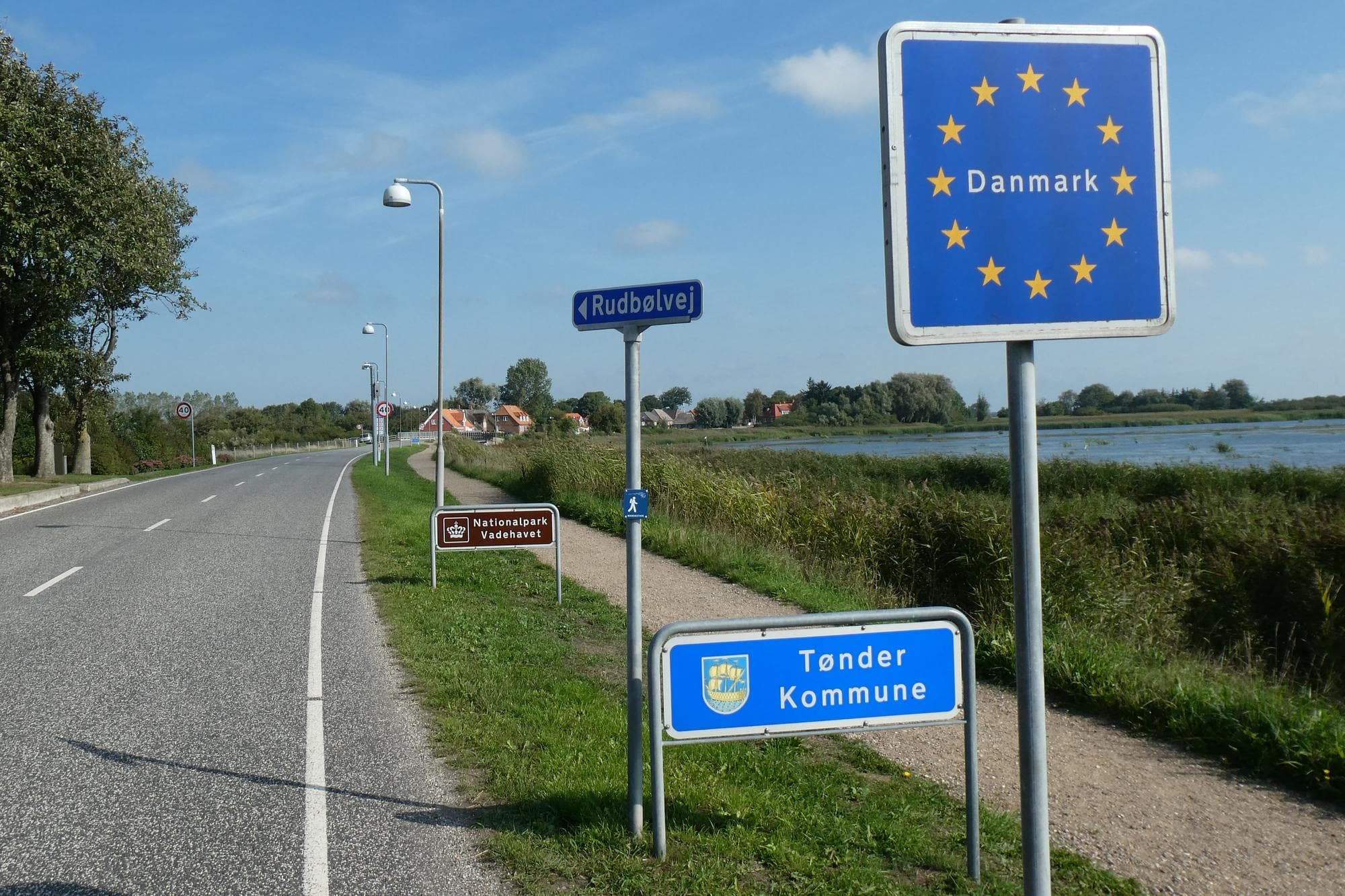
| Tønder | No registration the day before | Venue Jomfrustien 8, first floor, no lift; the municipality offers another room for people with disabilities |
Other municipalities have their own rules again. So ask your municipality as soon as your date is set. In every case: bring exactly the passports or ID cards you named in the application.
The ceremony step by step
Each municipality decides how the ceremony looks. In Copenhagen and Aabenraa, which describe it on their pages, it goes like this:
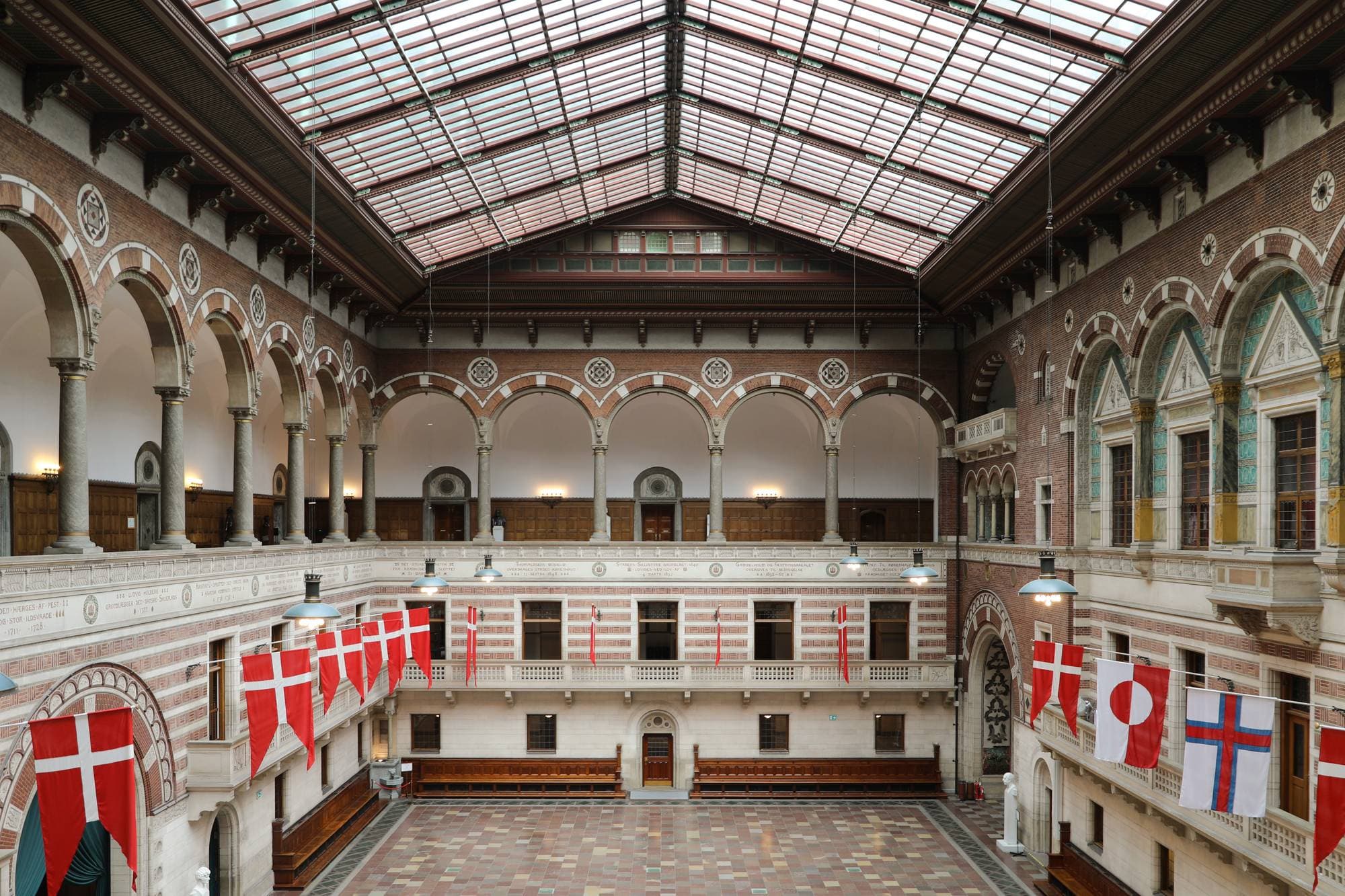
- Arrival: you and your guests arrive at the agreed time and wait in the waiting area. Aabenraa has a changing cubicle there; in Copenhagen, heart markings lead from the main entrance through the Great Hall to the waiting area.
- IDs: where this has not happened beforehand, your passports are checked now.
- Short speech: the registrar brings you into the ceremony room and gives a short speech.
- Saying yes: you are asked one after the other whether you want to marry each other and answer yes. The registrar then declares you married.
- Rings: if you wish, you exchange rings now. It is not required.
- Signatures: you, the two witnesses and the registrar sign the marriage register.
- Certificates: you receive two international marriage certificates straight away.
You must both be present at the same time (§ 20 of the Marriage Act). Saying yes through a proxy or by video call is therefore not possible.
What the registrar says
The core of the ceremony is set out word for word in the Danish marriage guidance (point 3.4). Translated, it reads: "As you have told me that you wish to marry each other, I ask you, [full name], do you take [full name] as your spouse?" After the yes, the second person is asked in the same way. Then: "Now that you have declared that you wish to marry each other, I hereby pronounce you married." The rest, such as the speech, is shaped by the municipality, together with you if you wish. Your own vows are not part of the legal form; ask the municipality beforehand whether there is room for them.
Witnesses: who provides them
Every ceremony needs at least two witnesses (§ 20 of the Marriage Act). There is no minimum age, but the witnesses must understand that a wedding is taking place. If you do not bring any, the municipality must provide them according to the marriage guidance. In practice many municipalities only do so at certain times:
- Copenhagen always provides two witnesses at City Hall. Your own witnesses need no ID there; just tell the registrar before signing.
- Tønder provides them on Tuesdays and Thursdays from 9:30 to 12:00; in the afternoon you bring your own.
- Aabenraa provides them Monday to Thursday, Sønderborg and Haderslev at their Friday ceremonies.
- Kolding provides them, except on Saturdays at City Hall.
All municipalities are compared in our guide Wedding witnesses in Denmark.
In which language is the ceremony held?
You must both understand what is said during the ceremony; Copenhagen expressly calls this a legal requirement. Copenhagen (chosen when booking), Aabenraa, Haderslev and Kolding, among others, marry couples in English or German; Tønder writes that its staff speak good German and English. If one of you does not understand the ceremony language, bring an interpreter, as Copenhagen and Kolding, for example, require. Whom the municipality accepts as an interpreter and what it costs is explained in our guide Interpreters at a Danish wedding.
Rings, photos and guests
- Rings: optional. In Aabenraa the exchange of rings follows after you have been declared married.
- Photos: in Copenhagen, guests may take photos and film, and a video call for those at home is allowed too; without guests, the city's witnesses take photos with your phone. In Aabenraa the witnesses are happy to take photos, and your own photographer may stand next to the registrar.
- Guests: how many can come depends on the room. Copenhagen allows up to 75 guests, children and photographer included. Most other municipalities do not state a number on their pages; ask them.
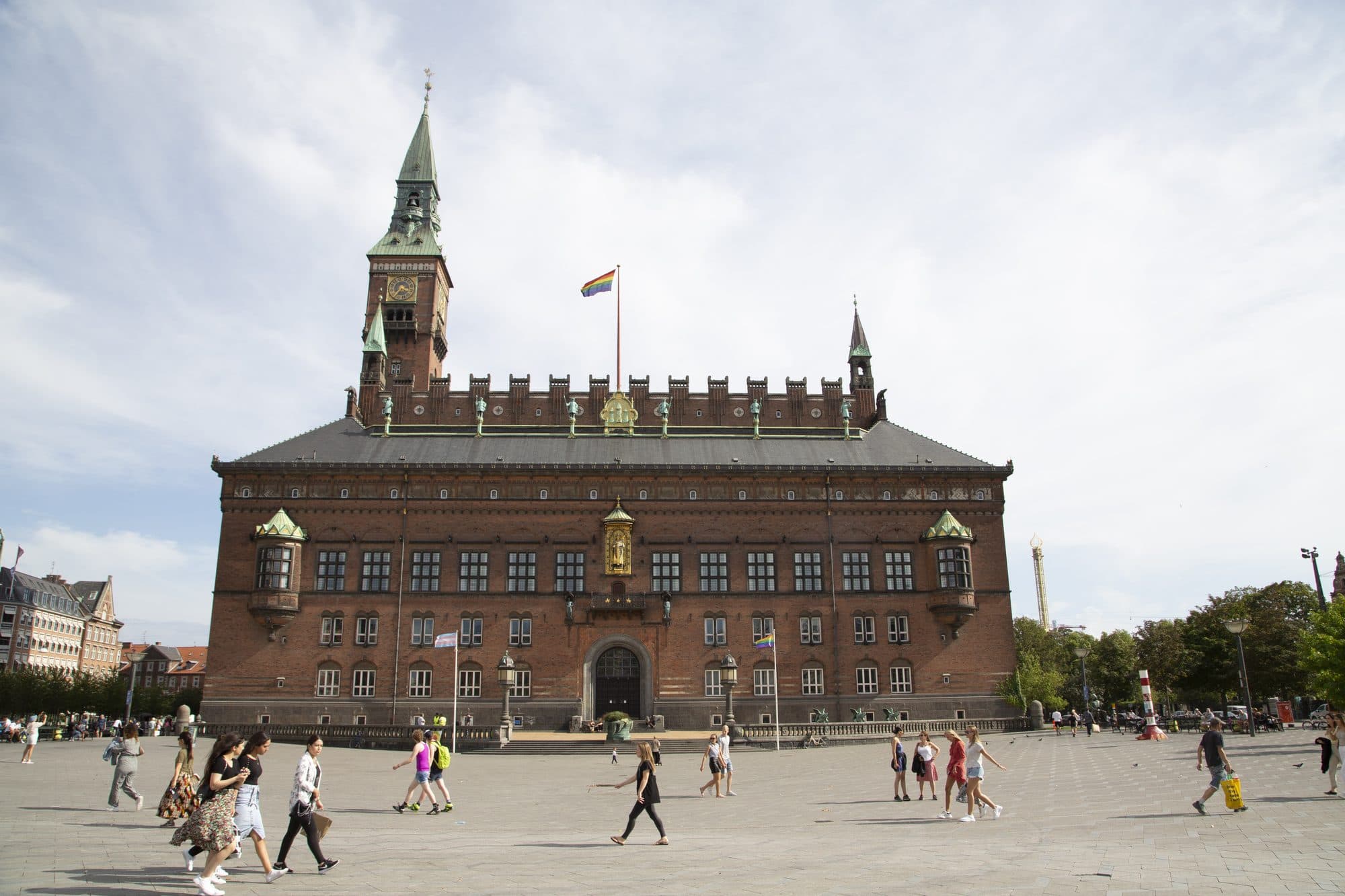
- House rules: at Copenhagen City Hall, rice and confetti are not allowed inside or on the steps, but they are on City Hall Square. The wedding room there is on the first floor, with no lift.
What to bring on the wedding day
| What | Why |
|---|---|
| Passports or ID cards | The same as in the application; the municipality uses them to establish your identity |
| Visa, residence permit or EES printouts | Proof of lawful stay; Haderslev and Kolding expressly require it |
| Confirmation of your date and a copy of the prøvelsesattest | For any questions on site |
| Your own witnesses, if needed | With passport or ID card, even if not every municipality asks for it |
| Interpreter | If one of you does not understand the ceremony language |
| Rings | Optional |
Without residence in Denmark you usually do not change your name at the ceremony: Tønder, for example, writes that this is not possible and that the certificate shows your names as they appear in your passports on the wedding day. What you can do afterwards is explained in our guide Name change after the wedding.
The two international marriage certificates
Right after the ceremony you receive two international marriage certificates, each with all details in Danish, German, English, French and Spanish. Check on the spot that names and dates of birth are correct. Further copies are issued by the municipality where you married; Tønder states about 4 weeks for a new certificate, and in Copenhagen the Wedding Office at City Hall is responsible. What to do with the certificate at home is in our guide International marriage certificate from Denmark.
What to do right after the ceremony
- Apostille only if needed: for authorities in Germany and Austria the certificate needs no apostille (EU Regulation 2016/1191), and the Swiss representation's leaflet does not mention one either. For other countries, only the Danish Ministry of Foreign Affairs issues it, for DKK 250 per document, by post in about 5 to 7 working days. More in our guide Apostille on the Danish marriage certificate; as an add-on it costs €149.99 with us (prices).
- Register the marriage at home: in Germany, registering the marriage (Nachbeurkundung) is optional; in Austria you must report it for the Central Civil Status Register; in Switzerland you report it via the Regional Consular Centre in Stockholm. The steps are explained in our guides for Germany, Austria and Switzerland.
- Family reunification: if your partner is to move in with you, the visa procedure follows, described in our guide Family reunification after the wedding in Denmark.
All steps after the wedding in the right order are in our guide Married in Denmark: what now?
The rules of your municipality
Wedding days, witnesses, language and registration differ from municipality to municipality. The details are in our guides to Tønder, Aabenraa, Sønderborg, Haderslev, Kolding, Odense, Esbjerg and Ribe, Fanø, Frederiksberg, Stevns and Ærø, and on our page Getting married in Copenhagen. An overview of the rules of many municipalities is on our page Wedding venues and their rules. Whether your case has any special features is shown by our free eligibility check.