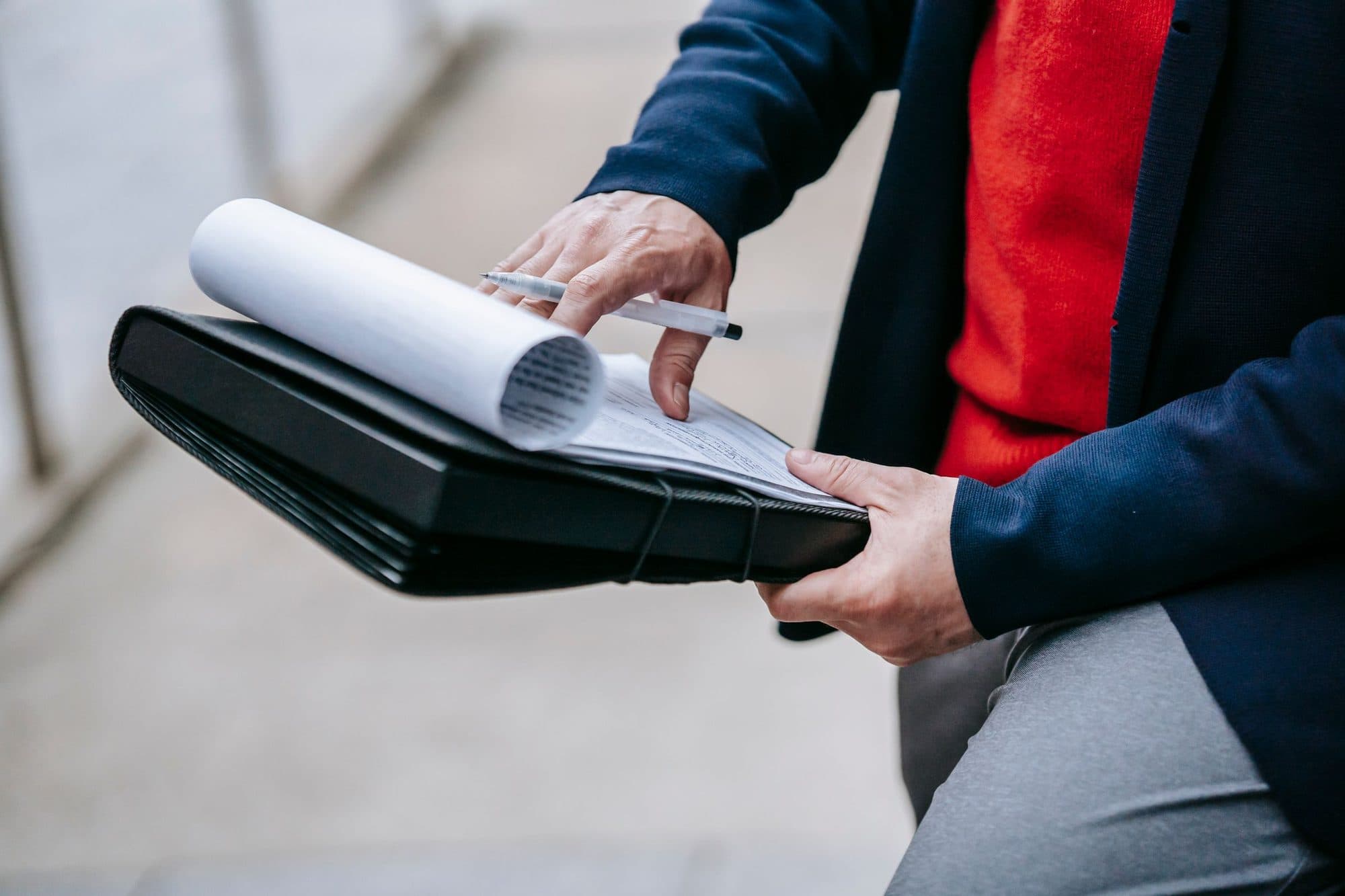

The wedding in Denmark is done, and now your partner from a non-EU country is to join you in Germany. For spouses of Germans the rules are easier than often described: as a rule no proof of income and no visa fee.
Which visa does your partner need?
If one of you is German and lives in Germany, the non-EU partner as a rule needs a national visa for spousal reunification (§ 28 Abs. 1 AufenthG). The partner applies for it before entry at the German mission responsible for their place of residence; that does not have to be the home country. The visa is usually valid for 90 days. Within that time the partner applies for the residence permit at the foreigners' office in Germany.
Exception: citizens of the USA, Canada, Australia, New Zealand, Japan, South Korea, Israel or the United Kingdom do not need a reunification visa. They may enter visa-free and apply for the residence permit directly at the foreigners' office within 90 days of entry (§ 41 AufenthV).
What applies when joining a German spouse
| Requirement | What exactly |
|---|---|
| Valid marriage | Danish marriage certificate, multilingual and without an apostille for German authorities (EU Regulation 2016/1191) |
| Residence | The German partner lives in Germany, shown with the registration certificate. |
| Age | Both at least 18 (§ 30 Abs. 1 Satz 1 Nr. 1 AufenthG) |
| Language skills | A1 German, unless an exception applies |
| Livelihood | For spouses of Germans, as a rule no proof (§ 28 Abs. 1 Satz 3 AufenthG) |
| Living space | No proof needed |
If your partner in Germany is not German but holds a residence permit, the rules are stricter: the authority then as a rule also checks income and living space (§§ 29, 30 AufenthG), and the visa costs €75.
A1 German and the exceptions
In principle the joining partner must be able to communicate in German in a simple way, i.e. at level A1, shown for example with a certificate from Goethe, telc or ÖSD. Under § 30 Abs. 1 Satz 3 AufenthG the proof is waived, among other cases, if
- the partner holds a citizenship that allows visa-free entry even for longer stays (the countries under § 41 AufenthV),
- illness or disability prevents them from showing German skills,
- there is recognisably only a low need for integration, for example with a university degree, or
- it is impossible or unreasonable for them to learn German before entry.
Which documents does the visa application require?
The exact list is in the information sheet of your mission. Typical when joining a German spouse:
- Application form and two biometric passport photos
- Passport with at least two empty pages, valid at least three months beyond the visa
- Danish marriage certificate (multilingual)
- Birth certificate, with an apostille or legalisation depending on the issuing country
- Copy of the German partner's passport or ID card and their registration certificate
- A1 certificate, unless an exception applies
Proof of income, a rental contract and health insurance for entry are as a rule not required by the missions when joining a German spouse. The mission may ask for further documents, though, and the visa usually needs the approval of the foreigners' office in Germany.
How long does it take, and what does it cost?
The duration depends on your mission: the wait for an appointment plus processing. The German missions in China, for example, state a standard processing time of 8 to 12 weeks (as of October 2023); other missions state other times. Check the information on your mission's website and book the appointment early.
On top come the A1 exam, possibly a language course, translations and the trip to the mission. These costs vary by country and provider.
Check for a sham marriage
The embassy and the foreigners' office refuse reunification if it is established that the marriage was entered into only to obtain a right of residence (§ 27 Abs. 1a AufenthG). This can be checked for any couple, regardless of the country of origin and also after a wedding in Denmark. So expect questions about how you met and about your relationship.
If your partner in Germany is an EU citizen
If your partner lives in Germany not as a German but as a citizen of another EU country, for example from Poland or Italy, EU free-movement law applies: the visa is free of charge and processed on an accelerated basis, and no A1 proof is needed. The missions have a separate information sheet for this.
If one of you is German, the wedding in Denmark does not turn this into an EU case: a short trip to another EU country to marry there does not create a right of residence under EU law; the German Residence Act still applies (BVerwG, 1 C 23.09). Austria and Switzerland have their own laws; ask the competent migration authority there.
After entering Germany
Register your address
Within two weeks of moving in, at the residents' registration office (§ 17 Bundesmeldegesetz).
Apply for the residence permit
At the foreigners' office while the visa is valid. It issues a temporary residence permit and sets its duration.
Integration course
Often mandatory if the German skills are not yet sufficient (§ 44a AufenthG).
Settlement permit
As a rule after three years with a residence permit, if you live together in Germany and show German at level B1 (§ 28 Abs. 2 AufenthG).
Sources and status
The rules in this article come from German residence law and from the German missions abroad:
- § 28 AufenthG: family reunification with Germans (German)
- § 30 AufenthG: spousal reunification and language proof (German)
- § 27 AufenthG: principles of family reunification (German)
- § 41 AufenthV: residence permit without a visa for certain nationals (German)
- § 52 AufenthV: fee exemptions (German)
- German missions in China: information sheet on spousal reunification, October 2023 (German)
- Federal Foreign Office: instruction on the validity of national visas, 17.07.2023 (German)
- Directive 2004/38/EC on the free movement of EU citizens
- BVerwG, judgment of 11.01.2011, 1 C 23.09 (German)
As of October 2026. Information sheets and processing times change. What counts is the current page of your mission; in difficult cases a migration counselling service can help.