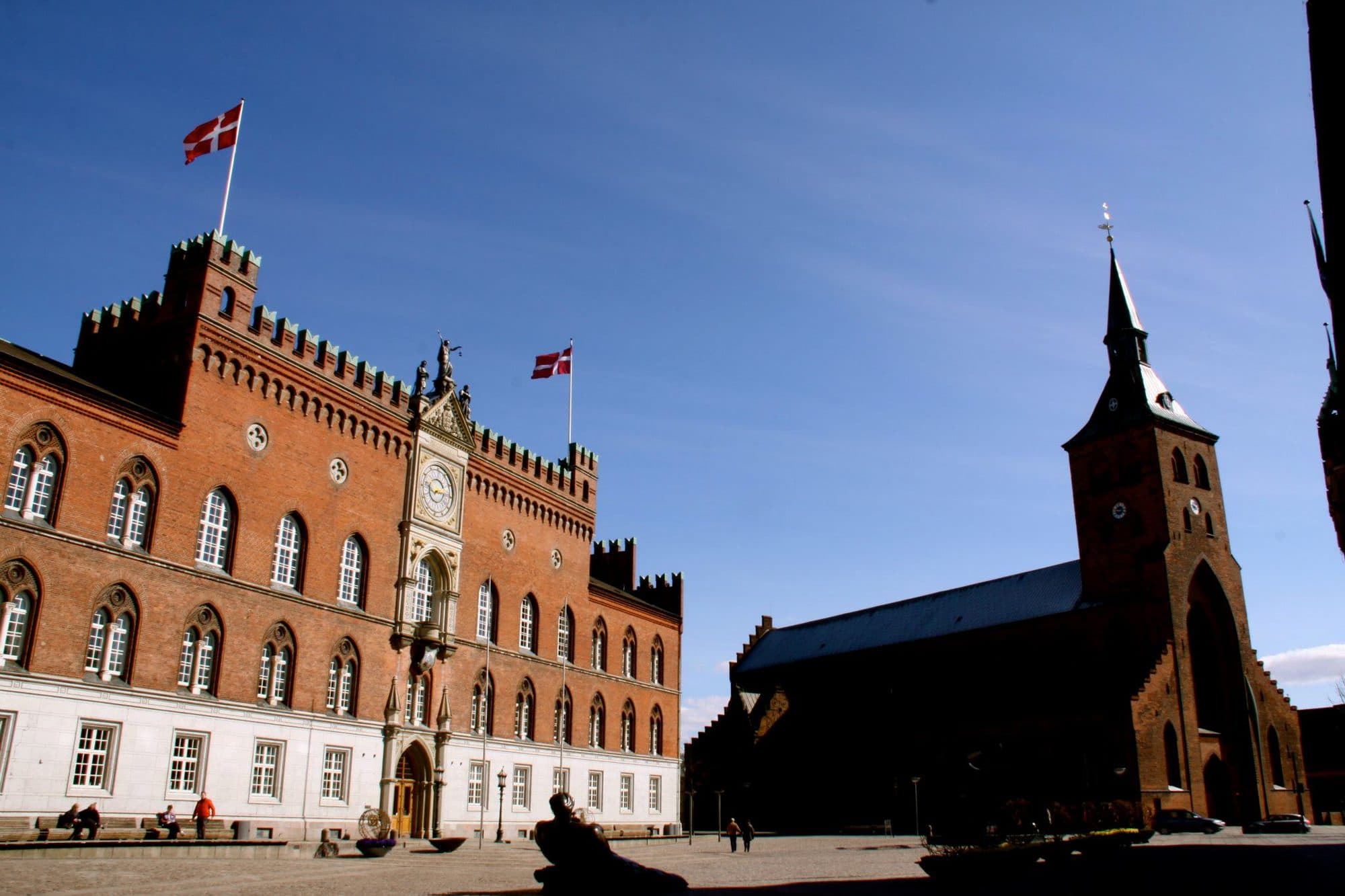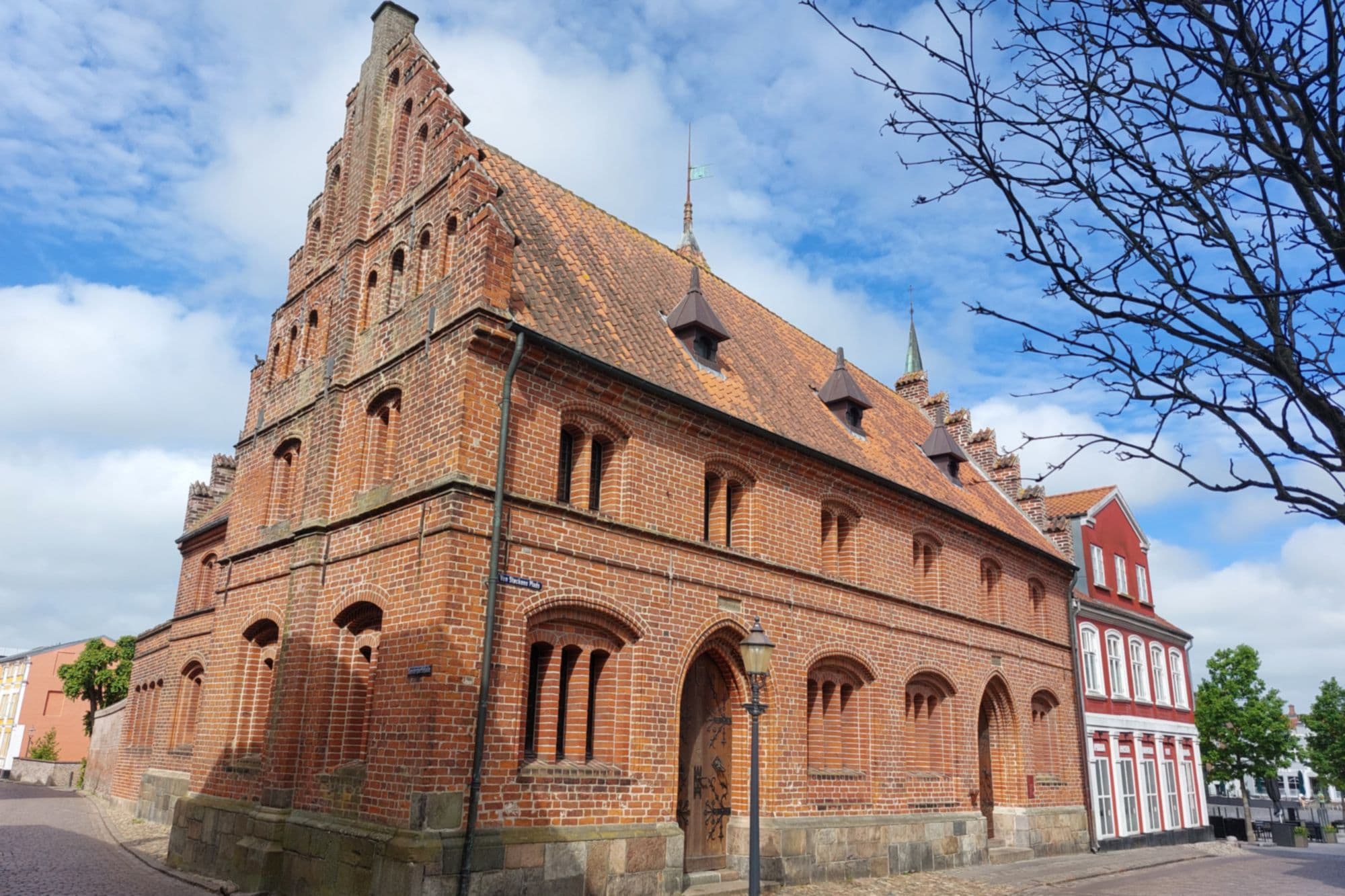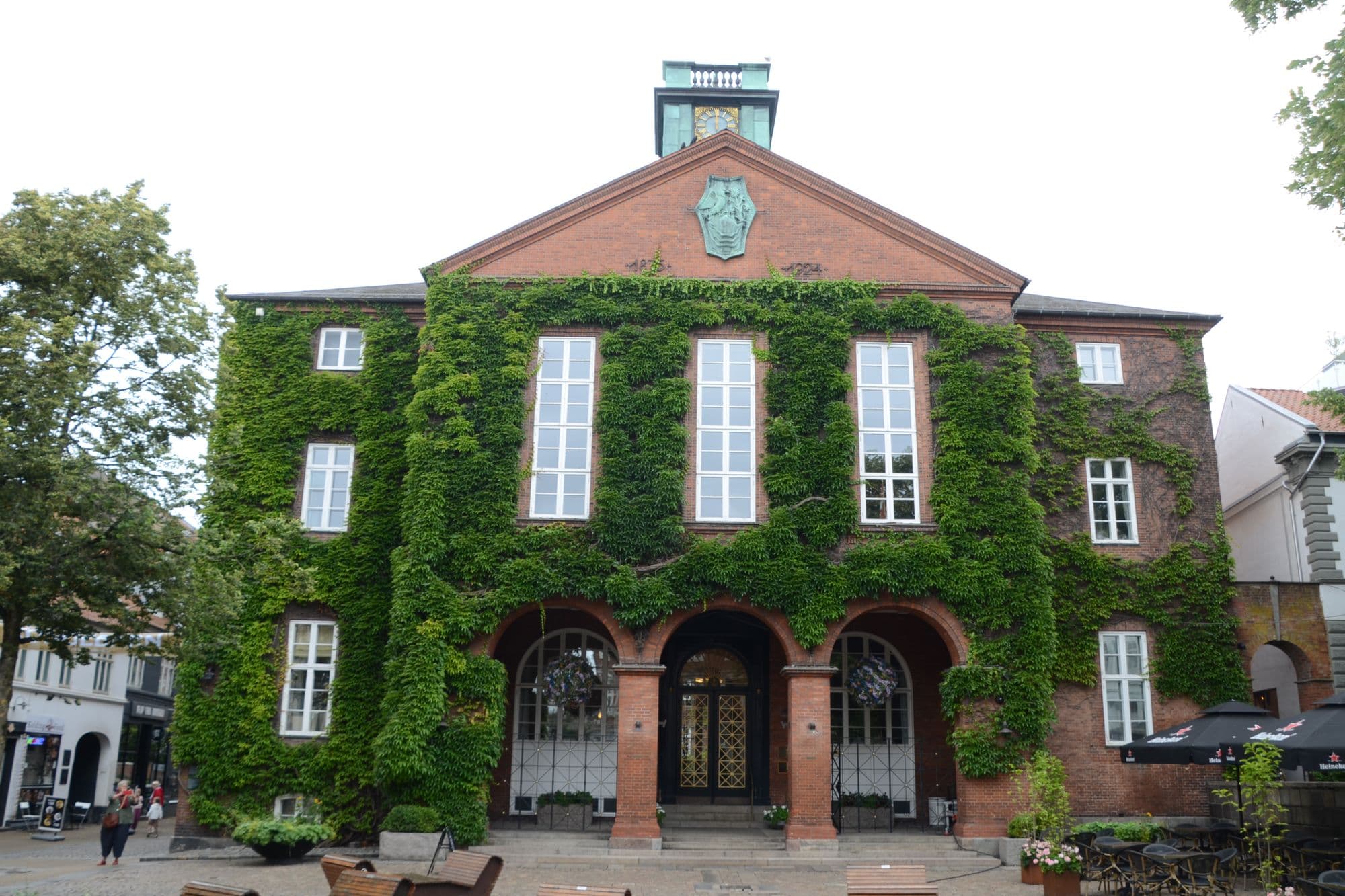

Couples from abroad can marry in Kolding at two venues: the town hall on Akseltorv or the historic Søstrehuset in the UNESCO town of Christiansfeld. Ceremonies are held in Danish, English or German. Unlike Tønder, Aabenraa, Haderslev and Sønderborg, Kolding explicitly offers couples from abroad Saturdays as well, with two witnesses of your own.
Who can get married in Kolding?
Kolding has its own English page for international couples, International Marriages. It explains who checks the conditions for marriage: if you are both Danish or Nordic citizens or both have a permanent right of residence in Denmark, you apply to the municipality. If that does not apply to both of you, you apply for the approval, the prøvelsesattest (certificate of marital status), to Familieretshuset, the Danish Agency of Family Law. That is the route for couples from Germany, Austria and Switzerland who do not live in Denmark.
The page does not require residence in Kolding or in Denmark. It clearly expects couples who travel in: when you register before the ceremony, you show your passport, residence permit or visa. What Familieretshuset requires from you is explained in our guides Prøvelsesattest and Documents for your wedding in Denmark.
Wedding days and venues: town hall or Søstrehuset?
Kolding holds ceremonies at two venues. The days differ, and so do the rules for witnesses (as of 3 November 2026, according to the municipality's English and Danish pages):
| Item | Kolding town hall | Søstrehuset Christiansfeld |
|---|---|---|
| Address | Akseltorv 1, 6000 Kolding | Nørregade 14, 6070 Christiansfeld |
| Wedding days | Monday and Friday during opening hours (10:00 to 14:00), Saturday 9:00 to 12:00 | every day except Sunday |
| Witnesses from the municipality | Mondays and Fridays yes, Saturdays no | can be provided |
| No ceremonies | weeks 28, 29 and 30, between Christmas and New Year | weeks 28, 29 and 30, between Christmas and New Year |
The Danish page for residents describes the town hall days a little more narrowly: Monday and Friday mornings and most Saturdays from 9:00 to 12:00. It also lists individual Saturdays on which the permanent staff hold no ceremonies. So do not count on an afternoon slot, and always check a Saturday with the municipality first.
At the Søstrehuset (Sisters' House) the days depend on when a registrar is available; in principle you can ask for any day except Sunday. The house stands in the Moravian settlement of Christiansfeld, which is a UNESCO World Heritage Site.
And Koldinghus castle?
The municipality does not list Koldinghus as a venue. The castle itself rents out halls for weddings; for 2026/27, for example, Christian III's Chapel from DKK 4,000 and the Church Hall from DKK 5,500 (each for up to 30 guests). The castle does not provide the registrar: for a civil ceremony there, the castle says you contact the mayor's office yourselves. Neither page says whether Kolding marries couples approved by Familieretshuset there. The municipality's English page only says that for another location in the municipality you ask Citizen Service about the possibility. Which municipalities explicitly offer special venues to couples from abroad is covered in our guide Special places to get married.
Getting married in Kolding on a Saturday: what applies?
- At the town hall Kolding holds ceremonies on Saturdays from 9:00 to 12:00. The municipality provides no witnesses then; you bring two of your own.
- Citizen Service is closed on Saturdays. You therefore show your documents the day before, on Friday between 10:00 and 14:00.
- On individual Saturdays the permanent staff hold no ceremonies; which ones is listed on the municipality's Danish page.
- Saturdays are also possible at the Søstrehuset in Christiansfeld, and the municipality can provide witnesses there. You still register the day before at Citizen Service in Kolding.
Where else couples from abroad can marry on a Saturday or on the beach is covered in our guide Saturday and beach weddings.
How it works: from the approval to saying "I do"
Name Kolding in your application
You apply for the prøvelsesattest to Familieretshuset and name Kolding as the municipality. You pay the fee of DKK 2,100 (about €281) when you submit, and it is not refunded. Both parts of the application must arrive within 14 days; otherwise the agency closes the case and you apply and pay again.
Familieretshuset checks your case
The agency usually decides complete applications within 5 working days. If it asks for more documents, your case joins a queue: as of 3 November 2026 it is working on such cases received in August 2026 (processing times). The approval is valid for 4 months from issue, shorter if a non-European passport or a residence permit expires earlier.
The municipality contacts you
After the approval, Familieretshuset forwards it to Kolding. According to the municipality, it then contacts you within 7 days to arrange the details: venue, day, language and witnesses. Kolding does not publish how long you wait for a date. We are often in touch with municipalities and ask on behalf of our couples.
Registration at Citizen Service
Before the ceremony you register at Citizen Service in Kolding, Nytorv 1, with your passports and, if needed, a residence permit or visa. It is open Monday to Friday from 10:00 to 14:00, on Thursdays until 18:00. If the ceremony is at the weekend or at a time that keeps you from coming during opening hours, you register the day before.
The ceremony
A registrar marries you. After you say "I do", you sign the marriage register, followed by the two witnesses and finally the registrar. At the end the registrar presents you with a gift on behalf of the municipality. You receive two international marriage certificates in five languages: Danish, German, English, French and Spanish.
How a Danish ceremony works in detail is described in our guide The wedding ceremony in Denmark. Which documents your case needs is shown by our free eligibility check.
Language, interpreter and witnesses
Ceremonies are held in Danish, English or German. You must both understand the chosen language; if one of you understands none of the three, you bring an interpreter. Your witnesses must understand the ceremony language too. What applies to the interpreter is explained in our guide Interpreters at the wedding.
Two witnesses are mandatory. They may be relatives or friends. If you bring none, the municipality provides two, except on Saturdays at the town hall. On its English page Kolding also shows short videos about both venues, in English and German ("Things to remember before the ceremony"). Watch them before you travel.
What to bring on the wedding day
- your passports, ideally the same ones you submitted to Familieretshuset
- a residence permit or visa if one of you needs one; the municipality asks for it at registration. How to prove your lawful stay since the EES is explained in our guide EES proof for the wedding.
- two witnesses of your own if you marry at the town hall on a Saturday
- an interpreter if one of you understands neither Danish nor English nor German
According to the municipality, you can only change your name in Denmark if you live there; otherwise you apply for the name change after the wedding in the country where you live. More on this in our guide Name change after the wedding. The municipality also points out that authorities often require an apostille on the certificate; for Germany and Austria it is not needed for the international marriage certificate, details in our guide Apostille on the marriage certificate.
What does a wedding in Kolding cost?
Kolding states no fee for the ceremony itself. Since August 2025, Danish municipalities generally no longer charge for ceremonies at the town hall: at that time the City of Copenhagen concluded in its own legal review that there is no legal basis for such fees. Kolding states no price for another venue in the municipality either; ask about it when you ask Citizen Service about the possibility.
| Item | Cost |
|---|---|
| Familieretshuset fee (mandatory) | DKK 2,100 (about €281), not refundable |
| Ceremony at the town hall or the Søstrehuset | no fee stated |
| Hall at Koldinghus, if you want one | from DKK 4,000 (chapel, up to 30 guests, 2026/27 price) |
| Certified copy of the marriage certificate | via the municipality's online shop, 7 days processing plus shipping |
Add travel and possibly a night's stay. In the Essential package (€249.99) you pay Familieretshuset's fee yourselves; in the Complete package (€649.99) it is included. Everything else is on our prices page and in our cost comparison 2026.
Getting there from Germany, Austria and Switzerland
By car: Kolding is on the E45 motorway, about 80 km by road north of the border at Padborg. Christiansfeld is close to the E45, about 15 km south of Kolding as the crow flies. The town hall is right in the city centre on Akseltorv, and Citizen Service is about 300 metres away on Nytorv.
By train: according to the DSB timetable, trains between Hamburg and Copenhagen stop in Kolding, among other places; not every train stops there. From Austria and Switzerland you travel via Hamburg. Journey times and changes are shown by Rejseplanen and Deutsche Bahn. DSB explicitly warns of possible engineering works in its timetable, so allow some buffer.
For a Saturday wedding arrive on Friday at the latest, because you register the day before during Citizen Service opening hours.
Kolding as a short trip: what to see nearby
- Koldinghus: the castle in the middle of Kolding, today a museum of the Royal Danish Collection. Even if you marry at the town hall, a visit or a photo walk fits in well on your wedding day.
- Christiansfeld: the Moravian settlement with the Søstrehuset is a UNESCO World Heritage Site. Its evenly laid-out streets are worth a stroll.
- Funen: Kolding lies on Kolding Fjord, not far from the Little Belt. Odense is about 70 km away by road.
Kolding or another registry office?
Kolding is in demand: in 2024 it was the fifth most frequent municipality that international couples named in their applications to Familieretshuset (Dansk Erhverv, based on Familieretshuset figures). This is how the rules compare with the registry offices further south:
| Municipality | Wedding days for couples from abroad | Good to know |
|---|---|---|
| Kolding | town hall Mon, Fri, Sat; Christiansfeld Mon to Sat | Saturdays at the town hall only with your own witnesses; registration at Citizen Service |
| Tønder | Tue and Thu | dates only 60 days ahead; municipal witnesses in the mornings |
| Aabenraa | Mon to Fri | dates only 60 days ahead; your own witnesses on Fridays |
| Haderslev | Fri, 10:00 to 12:00 | registration the day before |
| Sønderborg | Fridays only | in Gråsten or Nordborg; registration the day before |
On Funen, Odense holds ceremonies in the Bryllupssalen of its town hall, see Getting married in Odense, and on the west coast the Municipality of Esbjerg marries couples in the Old Town Hall of Ribe. Our guide Marrying near the border compares all venues close to the border side by side, our wait time comparison 2026 the waiting times, and our guide Copenhagen or Tønder which of the two suits you better. The rules of many more municipalities are on our page Venues and rules by municipality.
If your approval is already with another municipality and there is no date there, only Familieretshuset can forward it to Kolding; it stays valid for 4 months from issue. We take care of this step as a change of municipality; more on it in our guide Approved but no date. Kolding sometimes changes wedding days and rules at short notice, so check the municipality's current page before you apply.