
Marrying near the German border means Tønder, Aabenraa, Sønderborg, Haderslev or Kolding. In Tønder and Aabenraa, one day is enough. Sønderborg and Haderslev marry couples from abroad on Fridays only, after registration the day before; Kolding also on Saturdays.
Marrying near the border: the five registry offices at a glance
The table shows the ceremony days for couples who do not live in Denmark and when the municipality provides the witnesses, as published by the municipalities in October 2026. Registration, booking and language are covered for each town below.
| Town | Ceremony days | Municipal witnesses |
|---|---|---|
| Tønder | Tue + Thu | only 09:30–12:00 |
| Aabenraa | Mon–Fri | Mon–Thu |
| Sønderborg | Fri 08:30–14:00 | yes |
| Haderslev | Fri 10:00–12:00 | yes |
| Kolding | City hall: Mon + Fri 10:00–14:00, Sat 09:00–12:00; Christiansfeld: daily except Sun | except Sat at city hall |
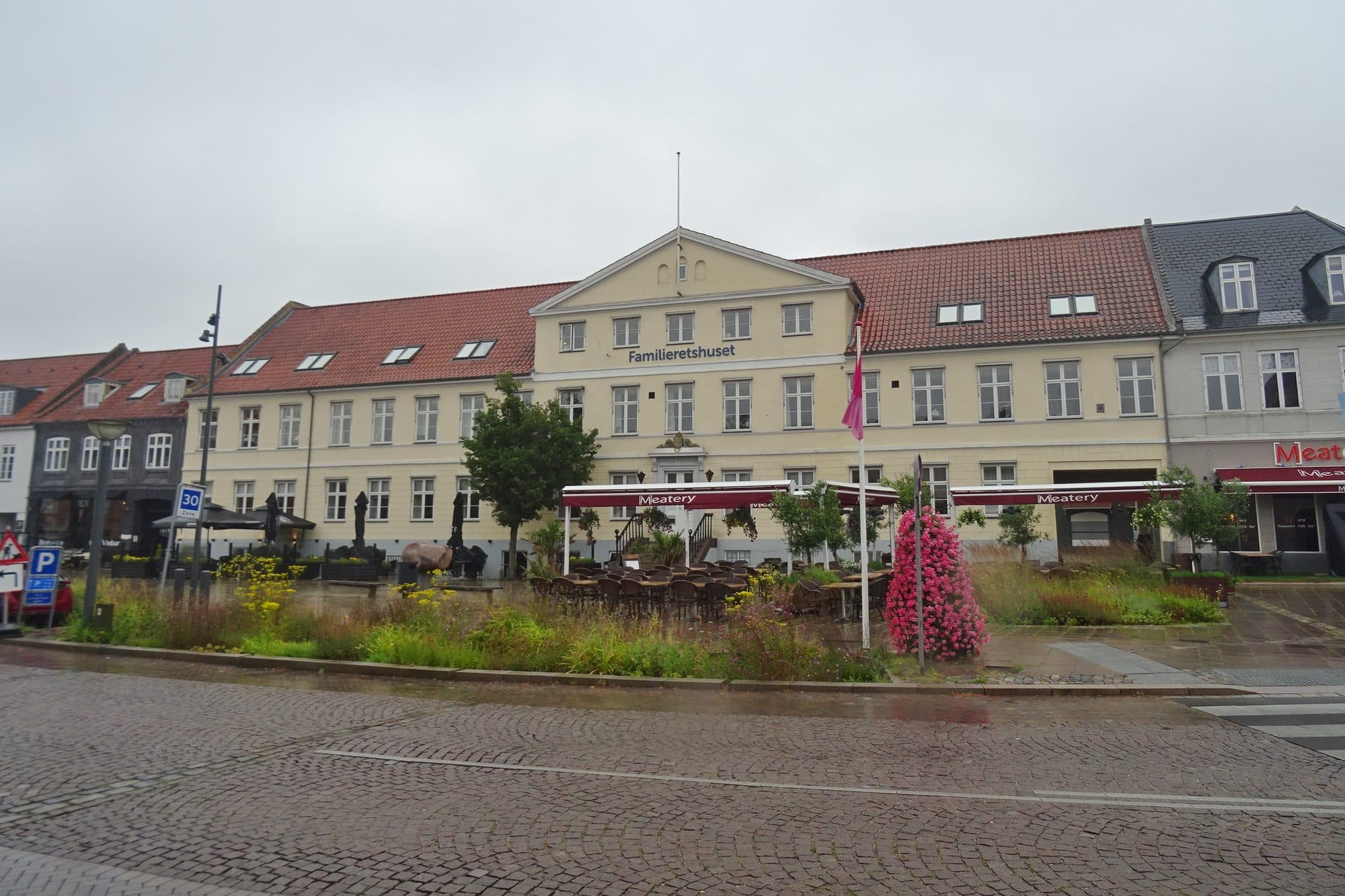
Whichever town you choose, you first need approval from Familieretshuset, the Danish Agency of Family Law.
The five registry offices in detail
Tønder: two fixed days, witnesses in the morning
Tønder marries couples without Danish residence on Tuesdays and Thursdays only. From 09:30 to 12:00 the municipality provides both witnesses free of charge; in the afternoon (Tuesday 13:00–14:00, Thursday 13:00–15:00) you bring your own. Their names and addresses must be submitted at least one week in advance, and they should understand German or English.
Booking is only possible online, through the link in the approval letter, not by email or phone. The municipality states no lead time; where dates are still free right now, we find out for our couples directly from the municipalities we are often in touch with. Ceremonies are held in German or English at the registry office, Jomfrustien 8, 1st floor, opposite the town hall. The building has no lift; couples with disabilities are married in another building. More: our guide Tønder registry office: times, witnesses, booking and our page Getting married in Tønder.
Aabenraa: Monday to Friday, dates in a 60-day window
Aabenraa marries couples from abroad Monday to Friday. From Monday to Thursday the municipality provides the witnesses free of charge; with your own witnesses you can get a slot on Monday, Tuesday, Thursday afternoon or Friday. Beach weddings are reserved for couples who bring their own witnesses.
You book the slot yourself through the link in your approval; the municipality always releases new dates 60 days in advance. You must both be able to communicate in English, German or Danish. Ceremonies take place at the Old Town Hall, Storegade 30, 1st floor. More: Getting married in Aabenraa.
Sønderborg: Fridays only, in Gråsten or Nordborg
Sønderborg marries couples from abroad on Fridays only, between 08:30 and 14:00, and not in Sønderborg itself but at the Old Town Hall in Gråsten or at Nørherredhus in Nordborg on the island of Als. Both buildings are hotels today. The municipality provides the witnesses.
On the Thursday before, you must appear in person at Citizens' Service (Borgerservice), Holger Drachmanns Plads 5, 2nd floor, between 09:00 and 17:00. The municipality lists the next free date on its own page. More: Getting married in Sønderborg.
Haderslev: Fridays, three languages, registration the day before
Haderslev marries couples without Danish residence on Fridays between 10:00 and 12:00 at the town hall, Christian X's Vej 39, in Danish, German or English, with witnesses provided by the municipality. You register the day before the wedding, bringing valid passports and proof that you are allowed to stay in Denmark. More: Getting married in Haderslev.
Kolding: Saturdays too, at City Hall with your own witnesses
Kolding lies a little further north, but it explicitly offers Saturdays to couples from abroad. At the city hall, ceremonies take place on Mondays and Fridays from 10:00 to 14:00 and on Saturdays from 09:00 to 12:00. At Søstrehuset in Christiansfeld (UNESCO World Heritage), ceremonies are held every day except Sunday. The municipality provides the witnesses on request, except on Saturdays at the city hall. Ceremonies are held in Danish, English or German; you and your witnesses must understand the language.
Once the municipality has received your approval, it will contact you within 7 days. Before the wedding you register at Citizens' Service, Nytorv 1, with your passport and, if needed, residence permit or visa; for a Saturday wedding, the day before. More Saturday options: Getting married on a Saturday or on the beach.
What about Ribe? Not fully confirmed
Esbjerg Municipality also holds ceremonies at the Old Town Hall in Ribe, according to the municipality Denmark's oldest town hall, and lists German as a ceremony language. However, in September 2026 we could not reliably verify the ceremony times for couples without Danish residence, and the details that can be found are not consistent. That is why Ribe is not in the table. Ask about days and times at vielse@esbjerg.dk before you apply.
Which town suits you?
What matters is which town fits your calendar and your journey:
One day, by car
Tønder or Aabenraa. No registration the day before: set off in the morning, head home after the ceremony.
- According to the municipality, Tønder is about 5 km from the border, 50 km from Flensburg and 200 km from Hamburg.
- Without a car: by train via Niebüll to Tønder.
Friday with an overnight stay
Sønderborg or Haderslev. Both marry on Fridays only and want to see you on the Thursday to register.
- The municipality provides the witnesses.
- Haderslev also marries in German; Sønderborg states no language.
It has to be a Saturday
Kolding. The only one of the five towns that explicitly offers this to couples from abroad as well: on Saturdays at the city hall (09:00–12:00) or at Søstrehuset in Christiansfeld.
- City hall: bring two witnesses of your own. Christiansfeld: witnesses provided by the municipality on request.
- Register on the Friday between 10:00 and 14:00 at Citizens' Service in Kolding.
In 2024, international couples named Aabenraa (3rd), Tønder (4th), Kolding (5th) and Sønderborg (6th) most often as their preferred municipality in applications to Familieretshuset, after Copenhagen and Ærø; Esbjerg, which Ribe belongs to, came 8th. Haderslev does not appear in this top 10. Whether that means a faster date there is not published, so ask about free Fridays before you apply.
Costs, certificates, language: what the towns have in common
Tønder explicitly says the ceremony is free, and Aabenraa says there are no additional costs. Haderslev lists a price only for a ceremony outside the town hall: DKK 550 plus travel costs. Sønderborg and Kolding say nothing about costs. The Familieretshuset fee is mandatory everywhere: DKK 2,100 (about €281), which is not refunded. The full calculation is in our cost comparison.
Tønder, Aabenraa and Kolding issue two international marriage certificates in five languages, and Haderslev also mentions two certificates. How to use them at home is explained in our guide to the international marriage certificate.
Aabenraa and Kolding require you both to understand the ceremony language; otherwise you need an interpreter. Two witnesses are required everywhere; when the municipality provides them is covered in our guide to witnesses in Denmark. Tønder, Aabenraa, Sønderborg and Haderslev also have German-speaking congregations of the Danish National Church, but they only marry couples under its rules, that is if one of you is a member of the National Church or of another Nordic Lutheran church; more in our guide Church wedding in Denmark.
How to plan: first the town, then the application
Choose the town, check free dates
Familieretshuset sends the approval to the municipality you name in your application and itself recommends checking beforehand where there are free dates. Changing later is only possible on request.
Complete your documents
If anything is missing, the agency asks for it, and that takes time: as of 18 October 2026, it is processing applications received in August 2026 where additional information has been requested, a backlog of roughly 2 months. What you need is listed in our documents guide.
Submit the application
Fee DKK 2,100 (about €281); processing only starts once payment has been received. Familieretshuset usually decides complete applications within 5 working days.
Book your date
As soon as your preferred date can be booked: in Tønder and Aabenraa you book through the link in the approval, in Aabenraa from 60 days in advance. The approval is valid for 4 months from the date of issue.
Travel and get married
For Sønderborg and Haderslev arrive a day early, for Kolding in good time to register.
Plan high summer and the turn of the year early: Tønder closes for a summer break in calendar weeks 30 and 31 and from 24 December 2026 to 3 January 2027, Kolding holds no ceremonies in weeks 28 to 30 or between Christmas and New Year, and Aabenraa is closed from 23 December 2026 to 3 January 2027.
Whether Denmark suits you, and which documents you need, is shown beforehand by our free eligibility check. If you want to get started right away, book the Complete package: we check your documents, submit the application and book your date as soon as it can be booked.
Sources, as of October 2026
Check your municipality's page before you apply, because ceremony times and free dates change.
- Tønder Municipality: Marriage (booking through the link in the approval letter)
- Aabenraa Municipality: Marriage registry office
- Sønderborg Municipality: Wedding
- Haderslev Municipality: Marriage and Vielse og ægteskab (Danish)
- Kolding Municipality: International marriages
- Esbjerg Municipality: Get married in Ribe (not fully verified)
- Familieretshuset: Processing time and note on choosing the municipality
- Fee 2026: Life in Denmark
- 2024 ranking: Dansk Erhverv, 14 February 2026 (Danish), based on figures from Familieretshuset
As of: October 2026.