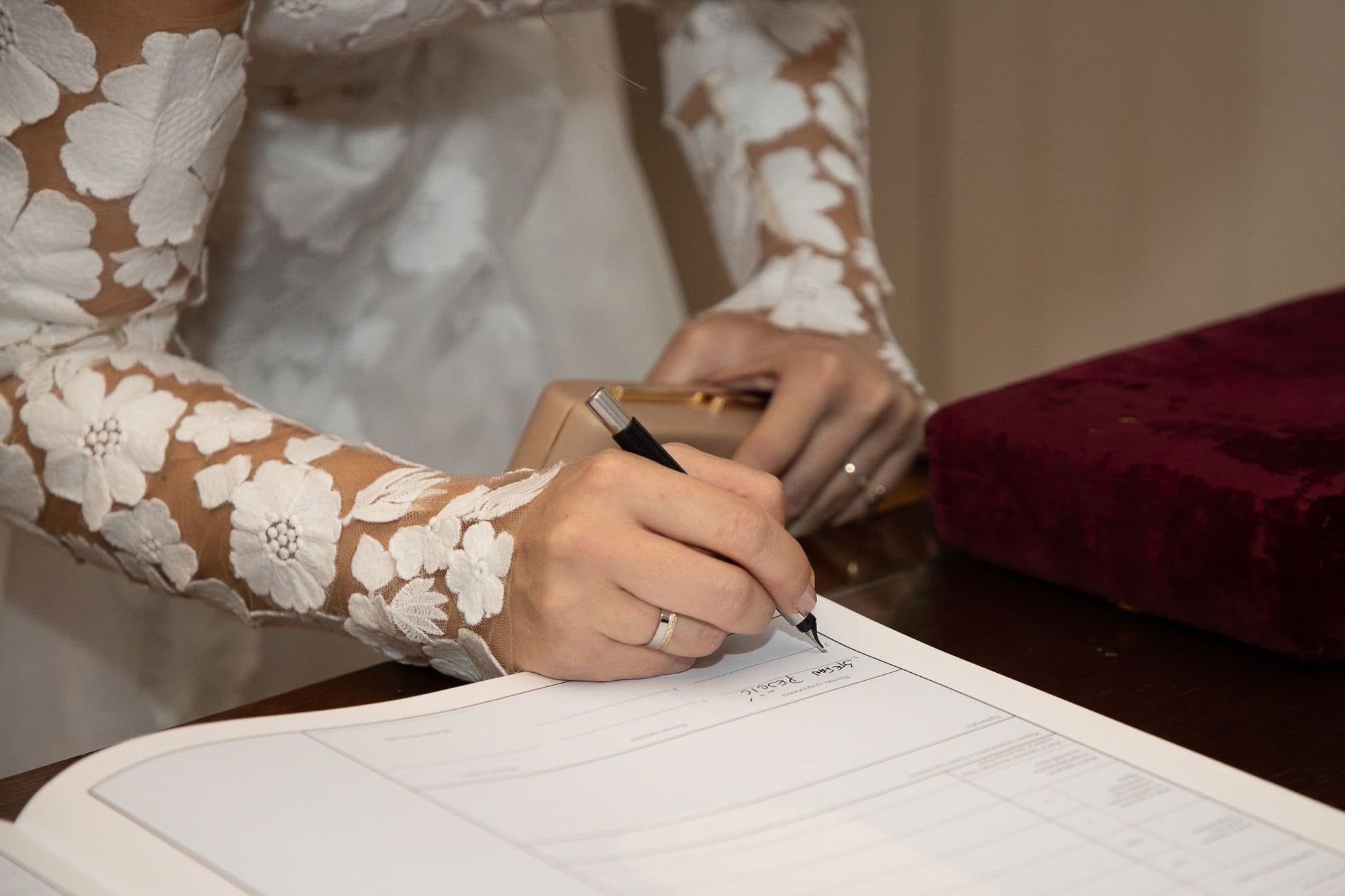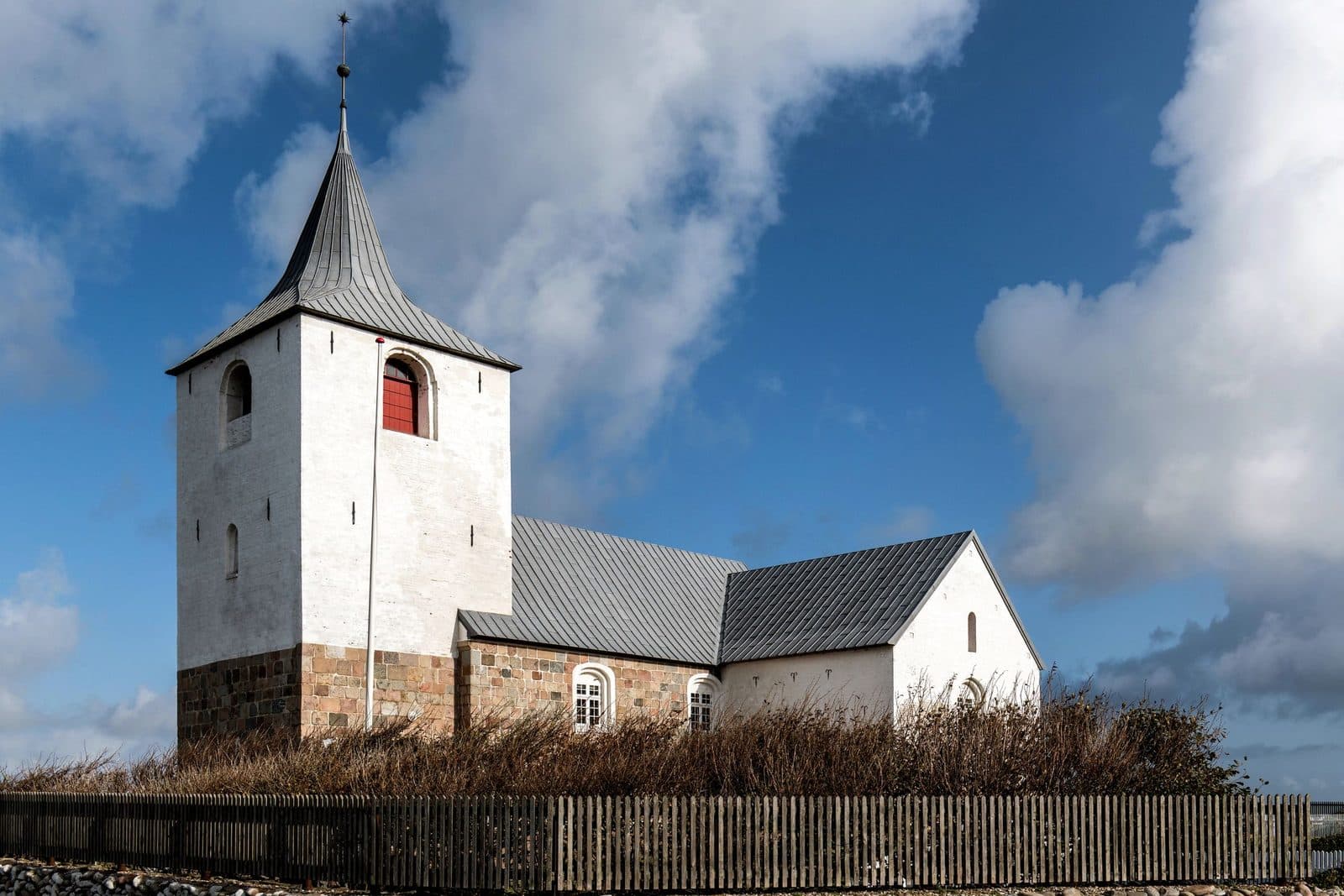

You can only have a legally valid wedding in the Danish National Church if one of you is a member or belongs to the Lutheran Church of Sweden, Norway, Finland or Iceland. The Protestant churches in Germany, Austria and Switzerland are not treated as equivalent to the National Church. According to the Catholic Church in Denmark, a Catholic wedding is possible if you are both baptised and one of you is Catholic, with at least six months' preparation. Otherwise you marry civilly and celebrate the church wedding at home.
The basic rule: membership of the National Church
The Danish Marriage Act knows two ways to marry, the civil and the church ceremony (§ 15); a wedding in the Danish National Church (Folkekirken) is legally just as valid as one at the town hall. A pastor of the National Church may only marry you in church, however, if one of you belongs to the National Church, and another recognised faith community only if one of you belongs to it (§ 16). If neither of you is a member, the pastor may not marry you; this is also stated in the guidance of the dioceses of Aalborg, Aarhus and Viborg from July 2026.
The law allows the Minister for Church Affairs to treat members of foreign Evangelical Lutheran churches as equivalent. This has only been done for the Lutheran churches of Finland, Iceland, Norway and Sweden (BEK 565/2019 § 2(6)). Whether and how you can become a member of the National Church without living in Denmark is not confirmed; ask the parish office.
What the pastor decides and which church it can be
Even with membership, you have no automatic right. A pastor is only obliged to marry you if you are both members and one of you belongs to their parish or has a special connection to it (BEK 565/2019 § 2(5)). If only one of you is a member, the pastor decides. The pastor may refuse divorced persons; what applies to a second marriage in general is in our guide second marriage in Denmark.
There is no free choice of church. You marry in the church of your parish of residence or in a church you have a special connection to, for example because you used to live there or close relatives live there; the pastor decides about other churches. Without residence in Denmark, that leaves the special connection or the pastor's decision. The ceremony is usually in Danish; the bishop can allow another language, and there are separate wedding liturgies in German and English. If the couple and the pastor agree, the wedding can also take place at a suitable place other than the church (BEK 565/2019 § 3(3)), but again only for couples who may marry in church.
German-speaking congregations in South Jutland and Copenhagen
In Aabenraa, Haderslev, Sønderborg and Tønder there are German-speaking congregations within the National Church. In Aabenraa, for example, weddings are held in German, bilingually on request, and the pastor also acts as registrar. The National Church's rules still apply: one of you must be a member.
- Sct. Marie in Sønderborg: The German congregation only marries couples with a connection to the church, saying it is “not a wedding church”. For a legally valid wedding, both of you must have a Danish CPR number; without one, only a blessing after a civil wedding is possible there.
- Nordschleswigsche Gemeinde: According to its statutes, the German free congregation in the rural districts only accepts members living in Denmark. For couples from abroad it is therefore not an option.
- Sankt Petri in Copenhagen: According to its own website, the German-speaking congregation accepts members of the National Church and of the EKD member churches. Whether membership of Sankt Petri without membership of the National Church is enough for a legally valid wedding is not confirmed; ask the congregation in writing beforehand.
Our guide Marrying near the border compares the town hall wedding times in the same towns.
A Catholic wedding in Denmark
The Catholic Church is a recognised faith community in Denmark. If a priest with Danish authorisation to perform marriages officiates, the wedding also has civil effect, and you do not need an extra appointment at the municipality. The requirements according to the Catholic Church in Denmark:
- You are both baptised and at least one of you is Catholic. If one of you is not baptised, a dispensation is needed.
- The wedding only takes place in a Catholic church or chapel, not in a garden, a forest or on the beach.
- Allow at least six months. Marriage preparation is mandatory and can take place where one of you lives.
- In most cases, Danish law does not allow you to bring a priest from home.
- A donation is customary, typically 500 to 1,000 kroner.
At home you need your parish: in German dioceses it prepares the marriage preparation protocol, a separate form is added for a wedding abroad, and the baptismal certificate may be no more than six months old (according to the Diocese of Rottenburg-Stuttgart; the procedure differs between dioceses). Since 2023 the legally valid marriage certificate has been issued by the municipality, no longer by the church. Whether belonging to a Catholic parish abroad is enough for the civil effect in Denmark is not confirmed; clarify this in writing with the Diocese of Copenhagen beforehand.
Anglican and other faith communities
The same principle applies to other faith communities: a wedding only has legal effect if the community is recognised in Denmark, its officiant is authorised by the Minister for Church Affairs, and one of you belongs to it. There is no obligation to marry non-members. The public register shows which communities are recognised; who may officiate there, you ask the community itself.
The Anglican church St Alban's in Copenhagen shows how strictly congregations handle this. As a rule it only marries couples if both are baptised and one of them is Anglican, belongs to a church in communion with the Church of England or has worshipped there regularly for six months; otherwise a blessing may be possible. Whether a wedding there also counts as a marriage under Danish law is not confirmed; ask the congregation.
No ceremony without a prøvelsesattest, not even in church
Before a church wedding, too, it must have been checked that you are allowed to marry (Marriage Act § 19). Couples who do not live in Denmark apply for this approval, the prøvelsesattest, to Familieretshuset. The fee is DKK 2,100 (about €281) and is not refunded; Familieretshuset usually decides complete applications within 5 working days.
Talk to the congregation
First clarify with the pastor or priest whether one of you meets the conditions, which church is possible and which documents the congregation needs.
Apply for the prøvelsesattest
Application and fee at Familieretshuset. Our free eligibility check and our documents guide show which documents you need.
Present the approval and marry
The prøvelsesattest must be presented to the pastor before the wedding and is valid for four months. In the National Church the pastor then issues the marriage certificate; for a Catholic wedding, the valid certificate comes from the municipality.
Recognition in Germany, Austria and Switzerland
For recognition, what matters is that the marriage was validly concluded in Denmark, that is before an authorised pastor or priest and with a prøvelsesattest.
- Germany: According to the German embassy in Copenhagen, both a ceremony before a Danish registrar and a church wedding are recognised “as a rule”. For the form, the law of the place suffices (Art. 11 EGBGB), and whether you were allowed to marry depends on your home law (Art. 13 EGBGB); more in our guide recognition in Germany.
- Austria: Under § 16(2) of the Austrian Private International Law Act, the form of the place of the marriage suffices for a marriage abroad. Austrian citizens must report the marriage so that it is entered in the Central Civil Status Register; more in our guide recognition in Austria.
- Switzerland: A marriage validly concluded abroad is recognised (Art. 45 IPRG). You have to report it yourselves via the Swiss representation, as the Danish authorities do not; more in our guide recognition in Switzerland.
A blessing instead of a wedding: also only with membership
If you are married civilly, a pastor of the National Church can bless your marriage (Marriage Act § 15(2)), in the church or at another suitable place. According to the Ministry for Church Affairs, one of you must be a member of the National Church for this, too. The pastor may refuse the blessing, and your wedding date remains that of the civil ceremony. The German congregation Sct. Marie in Sønderborg offers couples without a CPR number a blessing after the civil ceremony instead of a wedding, but only to couples with a connection to the congregation.
Where in Denmark you can have a civil wedding on the beach, in a garden or on a boat is shown in our guide Special places to get married.
Sources, as of October 2026
The information comes from Danish law, the National Church, the congregations named and the authorities:
- Law: Marriage Act, LBK 663/2026 (§§ 15–21), weddings in the National Church, BEK 565/2019, circular 9419/2019 and Act on faith communities, LBK 338/2026 (all Danish)
- National Church: borger.dk, folkekirken.dk, Ministry for Church Affairs on weddings, choice of church and blessing, Stiftsjura, guidance of the dioceses, July 2026 (PDF) and liturgies in other languages (all Danish)
- German congregations: kirche.dk, German congregation in Aabenraa, statutes of the Nordschleswigsche Gemeinde (PDF), Sct. Marie Sønderborg and Sankt Petri Copenhagen with its page on weddings (all German)
- Catholic and Anglican: Catholic Church in Denmark: wedding FAQ and Sankt Ansgar (Danish), Diocese of Rottenburg-Stuttgart: marriage preparation protocol (PDF, German), register of faith communities (Danish) and St Alban's: Marriage
- Familieretshuset: application, fee and validity and processing times (Danish)
- Recognition: German embassy in Copenhagen, EGBGB, Austrian Private International Law Act § 16 and Swiss representation: after the wedding (German)
As of October 2026. Church rules and the congregations' offers can change. Always clarify your plans with the congregation first, before you apply.