
You are not giving anything up: if you marry civilly in Denmark, you can hold your church or symbolic wedding whenever you like, even years later. The Danish ceremony takes care of the legal part, and you plan the big celebration afterwards at your own pace.
Are we missing out on the real wedding? No.
A common worry is that a wedding in Denmark supposedly feels like “half” a wedding, with the real thing missing. That is a misunderstanding. The civil ceremony is the legal act: it makes you a married couple. Everything that makes a wedding emotionally meaningful, that is the promise in front of your loved ones, the ceremony and the party, is independent of it and can be designed and scheduled however you wish.
Separating paperwork from celebration is also completely normal these days. In Germany, Austria and Switzerland too, many couples first marry civilly in a small circle and celebrate their church or symbolic wedding months or years later. With the Danish route you are essentially doing the same, just with a far simpler administrative part.
A Catholic wedding after the civil marriage
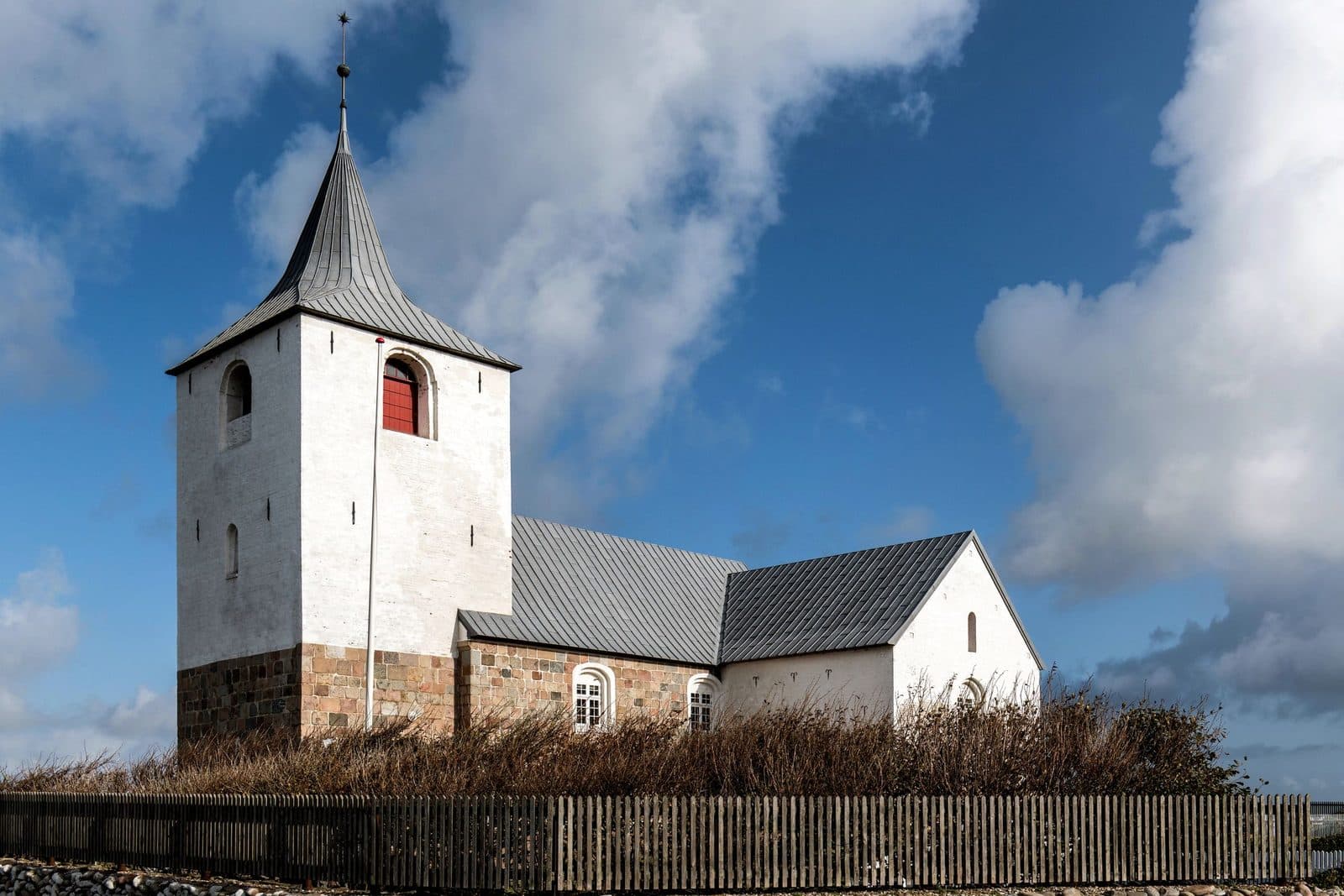
For Catholic couples, a church wedding after the civil marriage is a well-established, perfectly normal path. From the Church’s perspective, your actual wedding still lies ahead; the ceremony in church loses none of its meaning just because you are already legally married.
The first step is always a conversation with your parish. That is where the usual formalities are sorted out: typically a recent baptismal certificate, the marriage preparation talk with the priest or deacon, and scheduling. The exact requirements can vary between parishes and dioceses. Two situations need more lead time: if one of you was married before and the former spouse is still alive, a church annulment procedure is usually needed first. If one of you is not baptised, a dispensation is required (canon law, can. 1085 and 1086 CIC). So get in touch early, especially if you have your eye on a popular church or a summer Saturday.
A Protestant wedding or blessing
In the Protestant churches, a wedding service after the civil marriage is the standard case, straightforward and without lengthy bureaucracy. As a rule it is enough for at least one partner to be a church member; you discuss the details directly with your pastor’s office. A blessing in a smaller setting is also possible if you do not want a full wedding service.
And in Denmark itself? You can only have a legally valid wedding in the Danish National Church if one of you is a member or belongs to the Lutheran Church of Sweden, Norway, Finland or Iceland; the Protestant churches in Germany, Austria and Switzerland are not treated as equivalent. According to the Catholic Church in Denmark, a Catholic wedding there is possible if you are both baptised and one of you is Catholic. All the rules are explained in our guide Church wedding in Denmark.
A symbolic ceremony: completely flexible
A symbolic, celebrant-led ceremony has no legal or church framework at all, and that is exactly its strength. You choose the place, the date, the rituals and the person who marries you entirely freely: a professional celebrant, a friend with a gift for storytelling, or a family member. A barn, a beach, a mountain top, your own garden: anything works, because nothing has to be official. You are already married.
| Option | Requirements (as a rule) | Location | Timing |
|---|---|---|---|
| Catholic wedding | Conversation with the parish, recent baptismal certificate, civil marriage | Church | Any time later |
| Protestant wedding/blessing | Church membership of at least one partner, conversation with the pastor’s office | Church | Any time later |
| Symbolic ceremony | None (no legal framework) | Anywhere | Any time |
A church wedding generally requires an existing civil marriage. You prove it with the international marriage certificate from Denmark; German is on it as standard.
Why separating paperwork and party works so well
After your ceremony in Denmark you are legally married, and Germany, Austria and Switzerland generally recognise the marriage (more in our guide on the recognition of a Danish marriage in Germany). Tax class, insurance and the name change after the wedding can then be handled calmly.
The celebration no longer follows an authority’s appointment but your dream venue, your guests and your budget. A symbolic ceremony has no location rules, and for the church you choose the congregation that suits you.
Ideas for your later celebration
- A church wedding on your first anniversary, with a year of planning time
- A symbolic ceremony where your story happened: at the lake of your first date or in your grandparents’ garden
- A dinner with your closest circle first, the big celebration later
- A church blessing combined with your child’s christening
- A symbolic ceremony on the beach or in the mountains during your honeymoon
What the Danish ceremony is like
We will not sugar-coat it: the civil ceremony in Denmark takes about 15–30 minutes. It is not a lavish party, but it is personal, festive and dignified, and many couples are surprised by how moving this short moment is. Two witnesses are required. If you travel as a couple, the municipality has to provide them, but many municipalities only do so at certain ceremony times; more in our guide to wedding witnesses.
And there is more: the setting is genuinely beautiful. The old town of Tønder or the island of Ærø with its colourful houses and the sea on your doorstep are wonderfully photogenic; many couples combine the ceremony with a short holiday and a photo shoot. Read more in our Ærø island guide.
Denmark and your dream wedding are not an either-or. First you secure the uncomplicated, legally valid marriage, and then you celebrate exactly the wedding you really want. Whether the Danish route fits your situation is something our free eligibility check tells you.