
With a partner from India, three things matter for Denmark: every Indian document you submit needs an apostille from India's Ministry of External Affairs. Your partner needs a Schengen visa unless they live in the Schengen area with a residence permit, for example the EU Blue Card. And for the Indian passport, the Danish marriage certificate later needs an apostille from Denmark.
This guide is for couples where one of you lives in Germany, Austria or Switzerland and the other is an Indian citizen: whether they still live in India or already work or study here. It also applies if you are both from India and live in Germany. The rules for every other nationality are on our page rules by country of origin.
Which documents does a partner from India need?
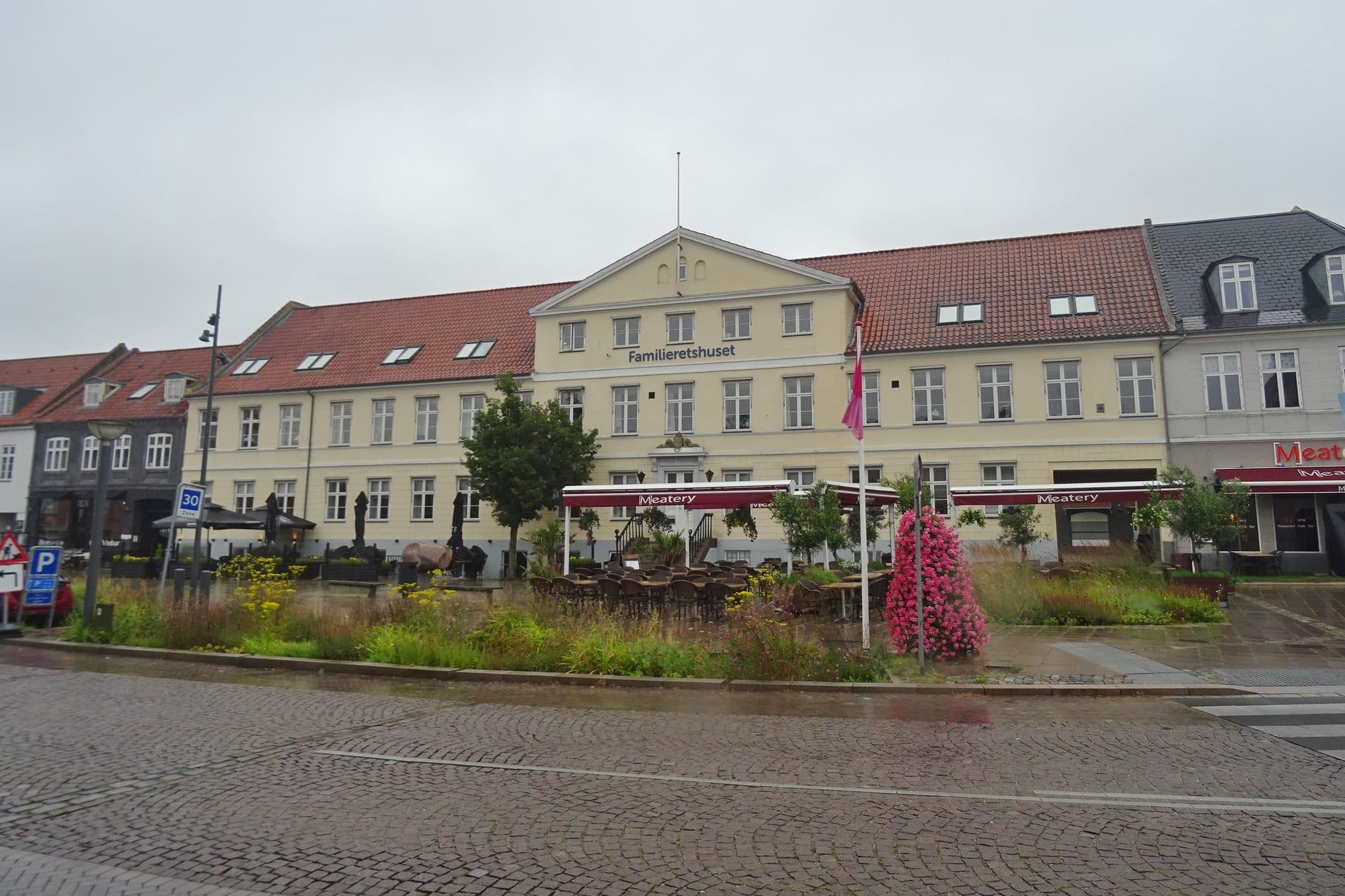
You apply online to Familieretshuset, the Danish Agency of Family Law. It checks whether you are free to marry and issues the prøvelsesattest, the Danish certificate of marital status. The fee is DKK 2,100 (about €281) and is not refunded. Depending on the situation, it needs these documents from the Indian partner:
| Document | When? | What matters |
|---|---|---|
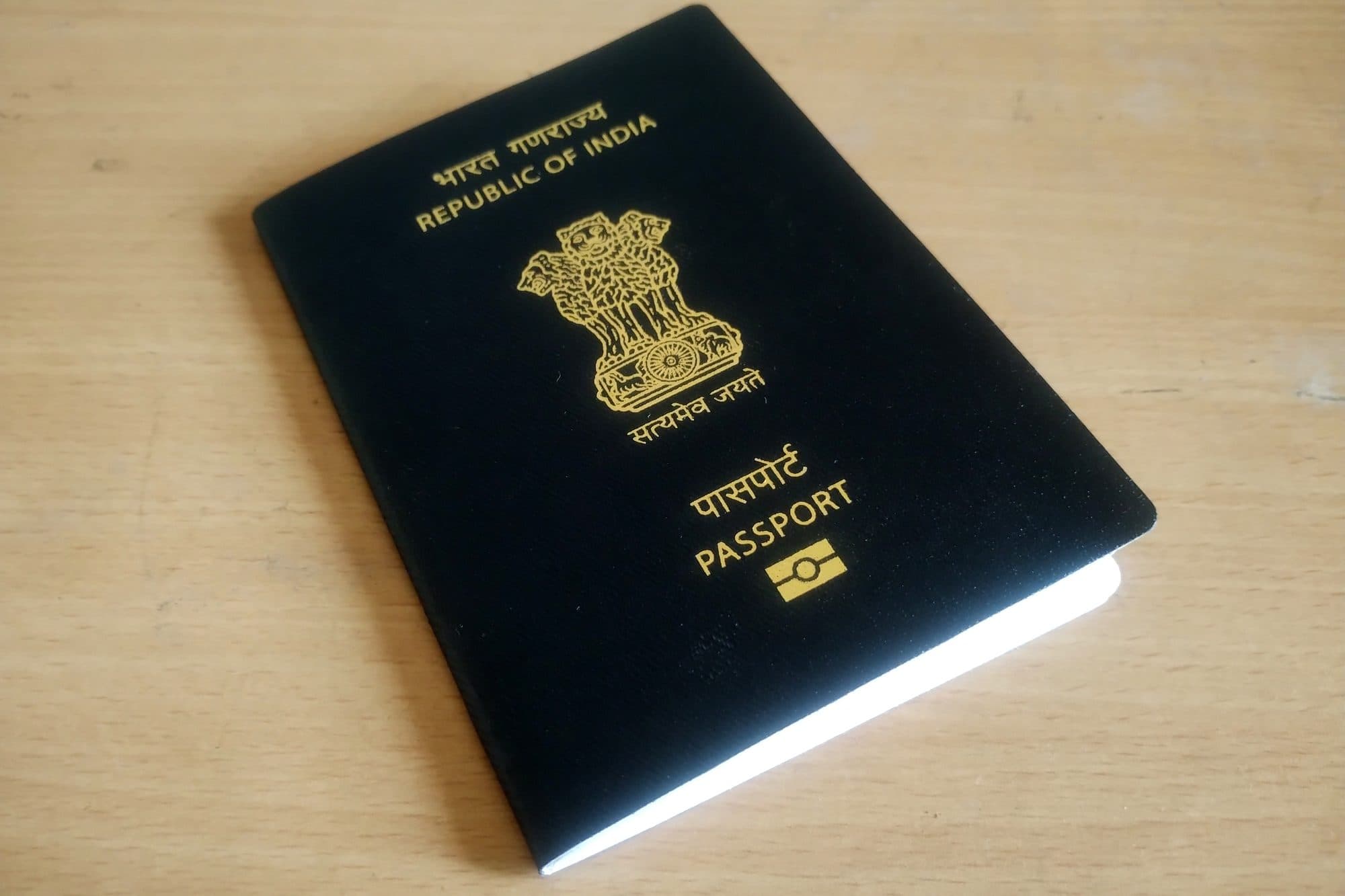
| Indian passport | always | colour scans of every page, including covers and blank pages; issued within the last 10 years, valid at least 3 months beyond the stay, at least 2 blank pages |
| Proof of legal stay | always | Schengen visa plus a printout of the EES calculator, after entry also tickets; or the residence permit of a Schengen country |
| Divorce decree | for every previous marriage | certified copy of the decree plus proof that it is final, both with an apostille |
| Death certificate | if a former spouse has died | death certificate with an apostille |
| Birth certificates | if you have children together | if issued in India: with an apostille |
| Proof of address | if you live together outside Denmark | for example a German Meldebescheinigung, no older than 4 months |
As a rule, Familieretshuset does not ask for your own birth certificates or proof of single status. If you have never been married, you confirm that in the application with your signature, under criminal liability; the agency only asks for proof in individual cases. An affidavit, a sworn statement about your marital status, does not help here: Danish administrative guidance states explicitly that it is not proof that someone is single, divorced or widowed, not even with an apostille. The full list for both partners is in our guide documents for your wedding in Denmark.
The apostille from India: who issues it and in which order
For documents from countries outside Europe that are party to the Hague Apostille Convention, Familieretshuset requires an apostille from the issuing country (documentation requirements). India has been a party since 2005, and Denmark accepts Indian apostilles. Which countries need which route is compared in our country list for apostille and legalisation.
The apostille is only issued in India, by the Ministry of External Affairs (MEA). According to the MEA, the ministry does not accept applications itself but through appointed collection agencies, and the document must first be authenticated by the competent authority of the state or union territory. The MEA states a fee of 50 rupees per apostille, plus the agency's charges (as of 3 November 2026). The Indian missions in Germany cannot help with this step: the embassy in Berlin requires documents issued in India to be apostilled in India first.
The order that saves time and money:
- Get a fresh certified copy of the document from the issuing authority or the court.
- Have the document authenticated by the competent authority of the state.
- Apply for the MEA apostille through a collection agency.
- Only if the document is not in English, wholly or partly in Hindi or a regional language for example: have an authorised translator translate it into Danish, English or German, including the apostille and all stamps.
- Upload colour scans of the document, the apostille and, if needed, the translation.
If you have the translation done first and the apostille afterwards, the apostille has to be translated separately. More on translations is in our guide certified translations, and on the apostille in general in our apostille guide.
Indian divorce decree: when is it final?
Under the Danish administrative guidance, for a divorce granted outside the Nordic countries Familieretshuset needs a copy of the divorce document, proof that it is final (Danish: retskraftpåtegning) and, where needed, a translation. The proof shows that the decision can no longer be appealed, or that the time to appeal has passed without an appeal.
For Hindus, Sikhs, Jains and Buddhists, the Hindu Marriage Act of 1955 usually applies. It only allows a new marriage once there is no right of appeal against the decree, the time to appeal has passed without an appeal, or an appeal has been dismissed (Section 15). The time limit is 90 days from the decree (Section 28). In a divorce by mutual consent (Section 13B), the couple files the second motion no earlier than six and no later than 18 months after the first; what counts for you is the date of the decree. Marriages under the Special Marriage Act, the Indian Divorce Act or Muslim law follow their own rules.
What you submit:
- A certified copy of the complete decree from the family court.
- Written confirmation from the court that the decree is final or that no appeal has been filed. Ask the court's registry which certificate it issues for this.
- The apostille for both documents, and a translation if they are not in English.
Denmark recognises an Indian divorce if a court or an authority granted it and there was a connection to India, for example because both spouses were Indian or one of them lived there. Denmark does not recognise a private divorce without a court or an authority. For Germany, an Indian divorce also needs recognition under § 107 FamFG unless both spouses were Indian at the time. Details are in our guide divorced: a second wedding in Denmark.
Names in the passport: missing surname and initials
Some Indian passports contain only a given name and no surname, or the names are spelled differently in other documents. The Embassy of India in Berlin knows the problem: it offers to add a surname to the passport, because in Germany a surname is required in all documents. The Indian passport system does not accept initials such as "SK SINGH"; it requires the full name.
For Denmark, this means: have the passport changed before you apply. Familieretshuset checks the passport you submit, and your partner identifies themselves with exactly this passport at the ceremony. If a divorce decree or a birth certificate spells the name differently, include a document showing that it is the same person, so that no follow-up request comes.
Visa or Blue Card: how your partner proves legal stay
Indian citizens need a Schengen visa (type C) for Denmark unless they hold a residence permit from a Schengen country. That leaves two routes (as of 3 November 2026):
- Your partner lives in India: they apply for a Schengen visa, stating the honest purpose "wedding in Denmark". In the application to Familieretshuset they need the visa sticker and a printout of the data page and the result page of the EES calculator for the planned stay; after entry, plane tickets or boarding passes are added. The prøvelsesattest is valid for four months from issue, but not longer than the visa.
- Your partner already lives in the Schengen area: an EU Blue Card, a German residence permit or another residence permit from a Schengen country is enough proof for Familieretshuset. Your partner then needs no visa for Denmark, and time spent on the permit does not count towards the 90 days of a short stay. The permit must still be valid on the wedding day.
How to apply for the visa and what can go wrong is explained in our guide getting married on a Schengen visa; the proof of legal stay step by step in our guide EES proof for your wedding.
After the wedding: Indian passport, OCI card and registration
Right after the ceremony you receive two international marriage certificates in five languages, including English. For India, what matters most is the apostille:
- Spouse's name in the Indian passport: the embassy in Berlin asks for a copy of the marriage certificate and of the spouse's passport. If the certificate was not issued in India, it must be apostilled.
- OCI card for the foreign spouse: the embassy asks for the international marriage certificate. If a party to the Hague Convention has apostilled it, it needs no further attestation by an Indian mission. For spouses, the embassy initially issues the OCI card for five years.
- Registration under the Foreign Marriage Act 1969: Indian missions can register a marriage concluded in their country under its law. The embassy in Bratislava, for example, requires that one spouse is Indian and lives within its jurisdiction. Whether the embassy in Copenhagen does this for couples living in Germany is something to ask the embassy. The official pages we checked do not mention any duty to register.
The apostille on the Danish certificate is issued by the Danish Ministry of Foreign Affairs, for DKK 250, in about 5 to 7 working days. How it works is explained in our guide apostille on the Danish marriage certificate; as an add-on, we take care of it for €149.99. If inheritance, property or proceedings in India are involved, get advice from a lawyer in India.
And in Germany, Austria or Switzerland?
In Germany, the Danish marriage is as a rule recognised without any procedure of its own, and registering it in the German marriage register is optional; more in our guide on recognition in Germany. Austria requires registration in the Central Civil Status Register, and Switzerland a report through the competent Swiss representation.
For moving in together after the wedding, it depends on who already lives here. If it is a German partner, the Indian spouse as a rule needs a spousal reunification visa and basic German. If, on the other hand, an Indian partner with an EU Blue Card lives in Germany and brings their spouse over, the law does not require proof of German from the spouse (§ 30 (1) sentence 3 no. 5 AufenthG). The details are in our guide family reunification after the wedding.
Typical pitfalls with an Indian partner
- The apostille is missing, or someone tries to get it from a mission in Europe.
- The translation was done before the apostille, so the apostille is not translated.
- The divorce decree comes without proof that it is final, or the time to appeal is still running.
- An affidavit is meant to replace a certificate.
- The name in the passport differs from the other documents, or the surname is missing.
- The application goes in before the visa has been issued, or the visa ends before a possible wedding day.
Each of these gaps leads to a follow-up request: Familieretshuset usually decides complete applications within 5 working days, but after a request for more documents it is currently working on applications from August 2026 (as of 3 November 2026). Which documents your case needs is shown by our free eligibility check; in the Complete package we check every document before it is submitted (all prices). More pitfalls for binational couples are summed up in our guide binational wedding in Denmark.