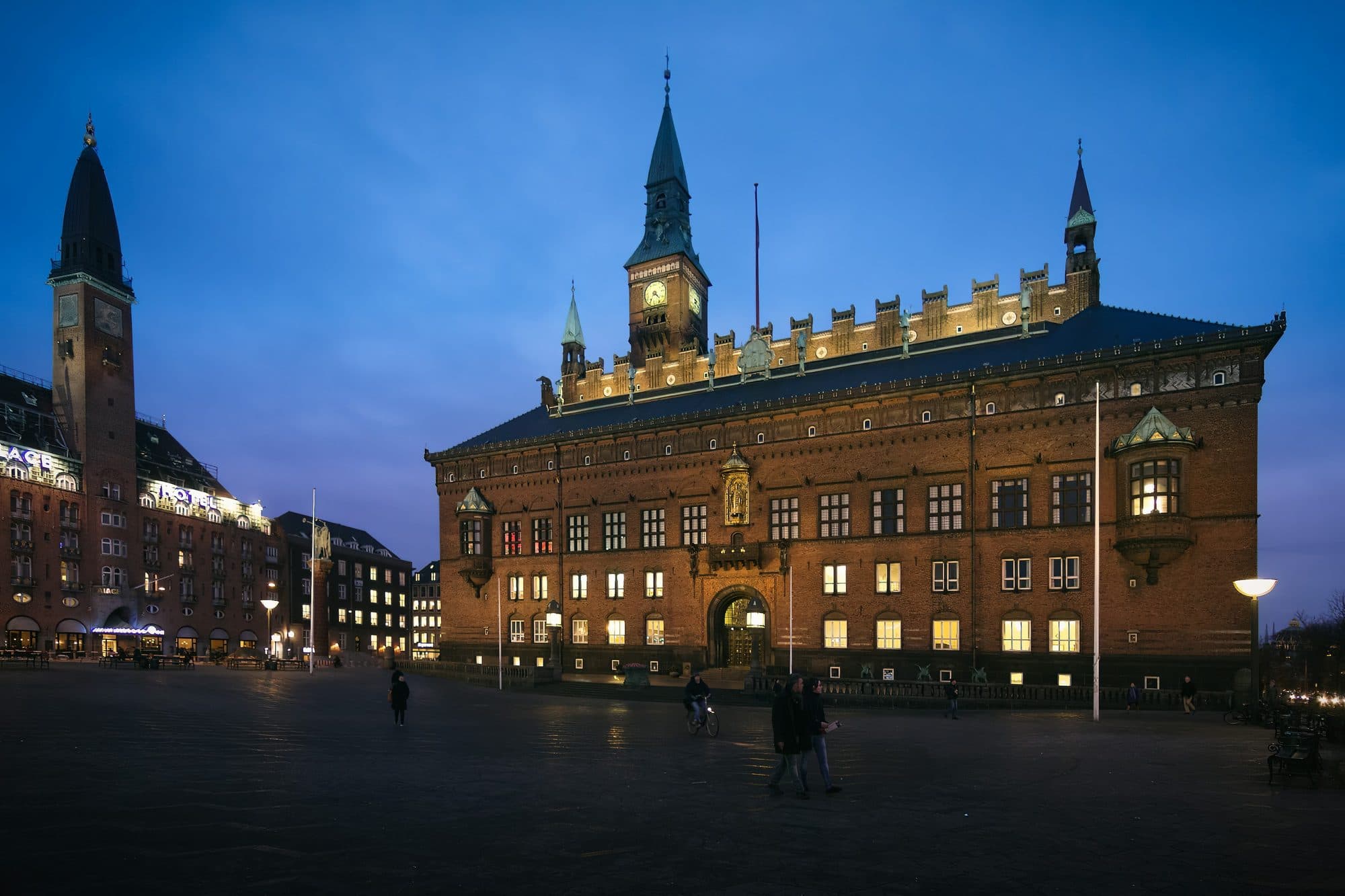

When both partners are German, getting married in Germany is straightforward. If one partner comes from a third country that does not issue a certificate of marriageability, a six- to twelve-month tour through registry offices, consulates and translators often begins. Denmark does not require this certificate.
What documents from your partner's country need and whether they need a visa for Denmark, you can look up for every nationality on our page rules by nationality.
Why Germany slows binational couples down
The German registry office demands a certificate of marriageability from the non-German partner's home country. In most third countries this document simply doesn't exist. Brazil, USA, India, many African countries, they don't know the concept. Instead, an exemption must be requested from the Higher Regional Court, which takes months and repeatedly ends with additional requests.
Denmark reviews differently: the Familieretshuset does not ask for a certificate of marriageability. Under Danish law it checks whether both partners may marry, i.e. are of age, single or legally divorced and capable of consent, and whether the non-EU partner is staying in Denmark legally on the wedding day.
| Criterion | Germany | Denmark |
|---|---|---|
| Time until the ceremony | with an OLG exemption often 6–12 months | usually 3–6 weeks from complete documents (depending on the municipality) |
| Certificate of marriageability | Mandatory (often impossible) | Not required |
| Required documents | Many, country-dependent | Few |
| OLG exemption | Often necessary | Not applicable |
| Recognition in DE | — | No recognition procedure; certificate without apostille (EU Reg. 2016/1191) |
What the non-EU partner also needs
Besides the usual documents, Familieretshuset mainly asks the partner without an EU, EEA or Swiss passport for this proof:
- Passport: all pages in colour, including the covers and blank pages. The passport must have been issued within the last 10 years, be valid for at least 3 months beyond your stay and have at least 2 empty pages.
- Legal stay on the wedding day: a residence permit of a Schengen state (the card, front and back); otherwise the visa or visa-free entry, documented with the printout of the EES calculator (data and result pages) and your plane tickets or boarding passes. A German Duldung (toleration) or a pending asylum procedure is not enough; more in our guides on the Schengen visa and the Duldung.
- Photos and chats: dated photos of you together and chat histories. The application form requires them as soon as one partner is not from the EU, the EEA or Switzerland.
- Previous marriage: if the partner was married before, you need the divorce decree with proof that it is final, with an apostille or legalisation depending on the issuing country, and with a certified translation if it is not in German, English or Danish (more in our guide to a second wedding after a divorce).
The five typical pitfalls
From the official requirements of Familieretshuset and the Danish registry offices, five mistakes emerge that binational couples make again and again, all of them avoidable.
Forgetting the apostille
Whether a document needs an apostille for Denmark depends on the issuing country. Documents from Europe, the USA, Canada, Australia, New Zealand, Turkey and the UK usually need none, with exceptions such as Russia, Ukraine, Belarus, Georgia or Kosovo. Documents from the other countries outside Europe need an apostille or legalisation. A wrong assessment means a follow-up request, which currently costs around 2 months (applications received in August 2026 are being processed, as of 18 October 2026).
Amateur translations
DeepL, Google Translate or a friend with language skills are not enough. Only publicly appointed and sworn translators are accepted. A faulty translation leads to a follow-up request.
Starting too late
The usual 3–6 weeks until the ceremony (more in some municipalities) count from complete documents. If certificates from a third country first have to be obtained, apostilled or legalised and translated, that time comes on top beforehand, and it varies by country. Plan this lead time before you book flights.
Outdated documents
Don't obtain certificates in advance just in case. Familieretshuset only asks for a single-status certificate in individual cases; otherwise, never-married applicants confirm their marital status by signing the application, under criminal liability. If the authority asks for proof, obtain it only then, so that it is current when you submit it.
Wrong order
Get the fresh certificate first, then the apostille, then the translation. Anyone who has the translation done first and the apostille added afterwards has to get the apostille translated as well and loses time.
What it realistically costs
The direct government costs in Denmark are transparent. What varies is the effort for documents and travel. Two realistic scenarios for 2026, for a binational couple whose certificates need an apostille and translation:
DIY
€1,131–1,781
- Government fee €281
- Apostilles for all third-country documents, incl. obtaining them, €150–300
- Translations €200–400
- Travel and hotel €500–800
Guided
€1,381–2,150
- All DIY items
- Essential €249.99: document list, instructions and WhatsApp support
- Or Complete €649.99 incl. the AFL fee, so it is not paid twice
- With Complete we check every scan before submission
Realistic timeline: a few weeks instead of many months
Anyone waiting in Germany for a certificate of marriageability for a third-country partner often plans for 6–12 months. The Danish route is much shorter: apostille (if needed) and certified translation can be handled in parallel; how long that takes depends on the issuing country. Familieretshuset generally decides complete applications within 5 working days (as of October 2026).
Realistically that means: usually 3–6 weeks from complete documents to the ceremony, considerably longer in some municipalities (Tønder and Aabenraa release dates exactly 60 days ahead, Ærø's Danish page now offers a date within 10 weeks, Copenhagen up to 4 months); the pace is set mainly by the municipality's next free date. Where dates are free right now is shown in our overview of current free wedding dates.
How to start in 4 steps
Check eligibility
Free: our eligibility check shows in three short steps which documents your case needs, and which it doesn't.
Obtain documents
Request fresh certificates, get apostille if needed, certified translation, in that order.
Online application to Familieretshuset
Upload scans, pay fee. Complete applications are generally decided within 5 working days (as of October 2026).
Date and ceremony
Book the registry office of your choice, travel, get married, take the marriage certificate.
Sources and status
- Familieretshuset: legal residence and passport requirements
- Familieretshuset: documenting your stay with the EES calculator
- Familieretshuset: marriage conditions (single-status certificate only if specifically needed)
- Familieretshuset: processing time for certificates of marital status
- Art. 13 EGBGB: marriage (German)
- EU Regulation 2016/1191: public documents without an apostille
- § 34 PStG: marriages abroad (German)
As of October 2026. We last checked the processing times on 18 October 2026; the current pages of Familieretshuset and your municipality are what counts.