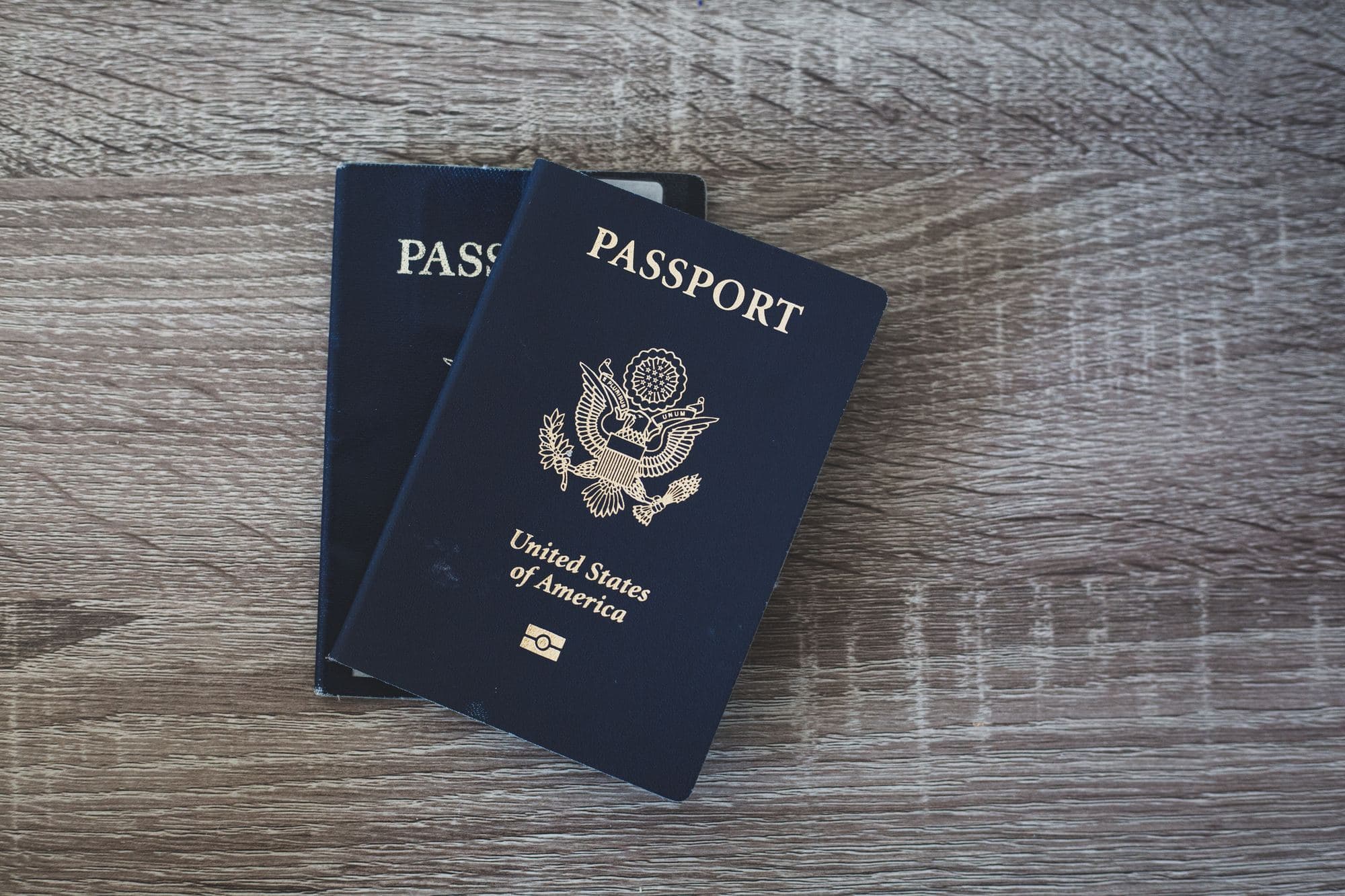

Yes, you can marry in Denmark without your birth certificates. Familieretshuset, the Danish authority that checks the marriage conditions for couples not resident in Denmark, only asks for the birth certificates of joint children. Your passport proves your name and date of birth. But even there it does not work without any papers.
Do you need a birth certificate in Denmark?
No, not for yourselves. If you want to marry without living in Denmark, you apply to Familieretshuset for a prøvelsesattest, the Danish certificate of marital status that approves your marriage. On its page Ansøg om prøvelsesattest Familieretshuset lists what you upload (as of 3 November 2026):
- photos of all pages of your passport, including the cover; EU citizens can submit their national ID card instead,
- proof that you may lawfully enter and stay in Denmark,
- if you were married before: proof that the earlier marriage has ended, for example by divorce or death,
- if you have children together: their birth certificates,
- if you live together outside Denmark: a residence certificate or similar proof.
Your own birth certificates are not on this list. The reason is in the Danish administrative guidance on marriage cases (Vejledning om behandling af ægteskabssager): both partners must prove their name and date of birth, and anyone not registered in Denmark can do so in another way, for example with a copy of the passport. So your passport does the job that the birth certificate does in Germany.
As a rule you do not need a certificate of marital status either. In the application you confirm with your signature, under criminal liability, that you are not married. Familieretshuset only asks for a certificate of marital status if it sees a reason in the individual case; more on this in our guide Certificate of marital status for Denmark.
| Document | Needed for Familieretshuset? |
|---|---|
| Your own birth certificate | No, the passport proves name and date of birth |
| Valid passport (EU citizens: ID card also accepted) | Yes, photos of all pages |
| Proof of lawful stay | Yes, for partners without an EU, EEA or Swiss passport |
| Certificate of marital status | Only if Familieretshuset requests it in an individual case |
| Divorce decree with proof that it is final, or death certificate | Yes, if you were married before |
| Birth certificates of joint children | Yes, if you have children together |
| Certificate of no impediment | No |
What you still need
A valid passport or travel document
No identity document, no application. For partners without an EU, EEA or Swiss passport, Familieretshuset requires a passport that is valid for at least 3 months beyond the stay, has 2 blank pages and was issued within the last 10 years. If you have a refugee travel document instead of a national passport, the details are in our guide Getting married in Denmark as a refugee.
Watch your name: if another document shows a different name from your passport, for example a former married name on a divorce decree, Familieretshuset can ask for proof of the name change, such as the marriage certificate or a change of name certificate.
Lawful stay on the wedding day
Citizens of the EU, the EEA and Switzerland meet this condition with their passport or ID card. Everyone else proves that they are lawfully in Denmark: with a residence permit from a Schengen country, or with a visa or visa-free entry plus the printouts from the EES calculator, which replaced the entry stamp on 10 April 2026. The details are in our guides Getting married on a Schengen visa and EES proof for your wedding. With a German Duldung or Aufenthaltsgestattung this is not possible; our guide Getting married with a Duldung explains why.
Proof about earlier marriages
If you were married before, you need the divorce decree with proof that it is final, or the death certificate of your former spouse, with an apostille or legalisation and translation depending on the issuing country. The details are in our guides Divorced: a second wedding in Denmark and Widowed: remarrying in Denmark.
What happens if Familieretshuset asks for more?
Familieretshuset may ask for further documents in an individual case. The guidance gives reasons such as a partner not living in Denmark, a concrete suspicion of an existing marriage, or a random check. It can then ask for a certificate of marital status from the countries where you live or have lived, have stayed, or whose nationality you hold. If there is doubt about your identity, the authority can ask to see photo ID.
For everyone who cannot obtain documents, the guidance sets important limits. Such a certificate cannot be demanded
- if it is impossible to obtain, for example because the country does not issue it at all or only to its own nationals,
- if obtaining it would be very difficult or burdensome, for example because the foreign authority does not reply or requires you to appear in person in a distant country,
- if the person is a refugee or asylum seeker and would have to contact the authorities of the country they fled.
You must document yourselves that it is not possible, for example with a statement from that country's authorities, the Danish embassy there or the country's embassy in Denmark. If no proof can be obtained at all, you confirm your marital status with your signature under criminal liability. Every request for more documents costs time, though: after such a request, Familieretshuset is currently working on applications received in August 2026 (as of 3 November 2026). How to respond is explained in our guide Requests for more documents or refusal by Familieretshuset.
And at home? Germany, Austria and Switzerland
Germany
At a German registry office you must prove your civil status with public documents when you give notice of the marriage (§ 12(2) PStG). If you were born in Germany, this usually means a certified extract from the birth register, issued by the registry office of your place of birth; in Berlin it may be at most 6 months old when you give notice. For births abroad, registry offices usually ask for the foreign birth certificate, with an apostille or legalisation and translation depending on the country.
If the certificate is missing, § 9(2) PStG offers a way out: if obtaining it is impossible or only possible with considerable difficulty or disproportionate cost, other documents can be enough. If that fails too, the registry office can ask for and take a statutory declaration (Versicherung an Eides statt). Whether it does so is decided case by case. If one of you is not a German citizen, the certificate of no impediment or an exemption from it is often added; see Getting married without a certificate of no impediment and Exemption by the Higher Regional Court.
Austria
The official list on oesterreich.gv.at names a birth certificate for Austrian citizens; the competent registry office tells foreign nationals which documents they need. Under § 15(2) of the Austrian Civil Status Act 2013, the registry office can waive a document if you make it credible that you cannot obtain it, or only with considerable difficulty, and the necessary details can be established in another way.
Switzerland
Under the Swiss Civil Status Ordinance you submit documents on birth, name, parentage and civil status if these details are not yet recorded in the civil register or are not up to date (Art. 64 ZStV); as a rule the documents may be no more than six months old (Art. 16 ZStV). If documents cannot be obtained despite sufficient efforts, the cantonal supervisory authority can allow a declaration before the civil registry office, provided the details are not disputed (Art. 41 ZGB).
| Country | Birth certificate for the wedding? | If none can be obtained |
|---|---|---|
| Denmark (Familieretshuset) | No, the passport proves name and date of birth | Not needed; only certificates of joint children |
| Germany | Yes, birth register extract or foreign birth certificate | Other documents or a statutory declaration, if the registry office accepts them (§ 9(2) PStG) |
| Austria | Yes, according to the official list | The registry office can waive it if you make it credible that it is not possible (§ 15(2) PStG 2013) |
| Switzerland | Yes, if the birth is not yet in the register | Declaration before the civil registry office with approval of the cantonal supervisory authority (Art. 41 ZGB) |
So a wedding without a birth certificate is not ruled out at home either. The difference lies in the procedure: there, an authority decides on a substitute case by case; in Denmark your own birth certificate is not part of the process to begin with. What else speaks for one side or the other is compared in our guide Registry office in Germany or Denmark.
Who the Danish route helps
- people whose birth was never registered or whose records were lost through war, fire or collapsing authorities,
- refugees who cannot or must not contact the authorities of their country of origin,
- partners from countries where a birth certificate is only issued in person or only after a long chain of apostille or legalisation; the rules per country are in our country list for apostille and legalisation,
- couples who simply want to avoid obtaining, translating and certifying several documents.
Which documents apply to your partner's nationality is shown in our overview of rules by country of origin; the complete list is in our guide Documents for your wedding in Denmark.
The limits: what Denmark does not replace either
A wedding “without papers”, as it is sometimes advertised, does not exist. Familieretshuset checks identity, marital status and residence in every application, and on the wedding day the municipality confirms once more that you are the people named in the approval.
Birth certificates can also come back after the wedding. You do not need one for recognition in Germany: a marriage validly concluded in Denmark is, as a rule, valid there without any procedure, see Recognition in Germany. If you choose to have it entered in the German marriage register, however, registry offices such as Berlin's ask for a birth certificate or birth register extract for each spouse; § 9(2) PStG applies there too. Austria and Switzerland enter the marriage in their registers and may ask for their own proof, see Recognition in Austria and Recognition in Switzerland.
In later procedures, such as family reunification, the authorities check your identity under their own rules. The Danish marriage certificate does not replace missing civil status documents there.
How to go about it
Check the passport
Is it valid until after the wedding, and for partners without an EU passport at least 3 months beyond the stay? Do the names match your other documents?
Clarify your stay
Residence permit from a Schengen country, visa or visa-free entry: what applies to you on the wedding day?
Document earlier marriages
Get the divorce decree with proof that it is final, or the death certificate, with apostille and translation depending on the country.
Take the eligibility check
The free eligibility check shows which documents your case needs.
Apply
Familieretshuset usually decides complete applications within 5 working days; the approval is valid for 4 months.
Be ready for requests
If you cannot get a document that is requested, document why instead of leaving the application unanswered.
If you would rather not check the documents alone: in the Complete package for €649.99, which includes Familieretshuset's fee, we review every document before it is submitted. All packages are on our prices page.