
Yes, you can marry in Denmark with a partner from the UK, and the British documents are straightforward: Familieretshuset accepts them without an apostille. Since Brexit, however, British citizens count as third-country nationals. This mainly affects three things: the passport rules, proving legal stay through the EES and the question of where you may live together after the wedding.
This guide is for couples where one of you comes from Germany, Austria, Switzerland or another EU country and the other has British citizenship. At the end you will find what applies to two British citizens who both live in the UK. The rules for every other nationality are on our page rules by country of origin.
What has changed since Brexit?
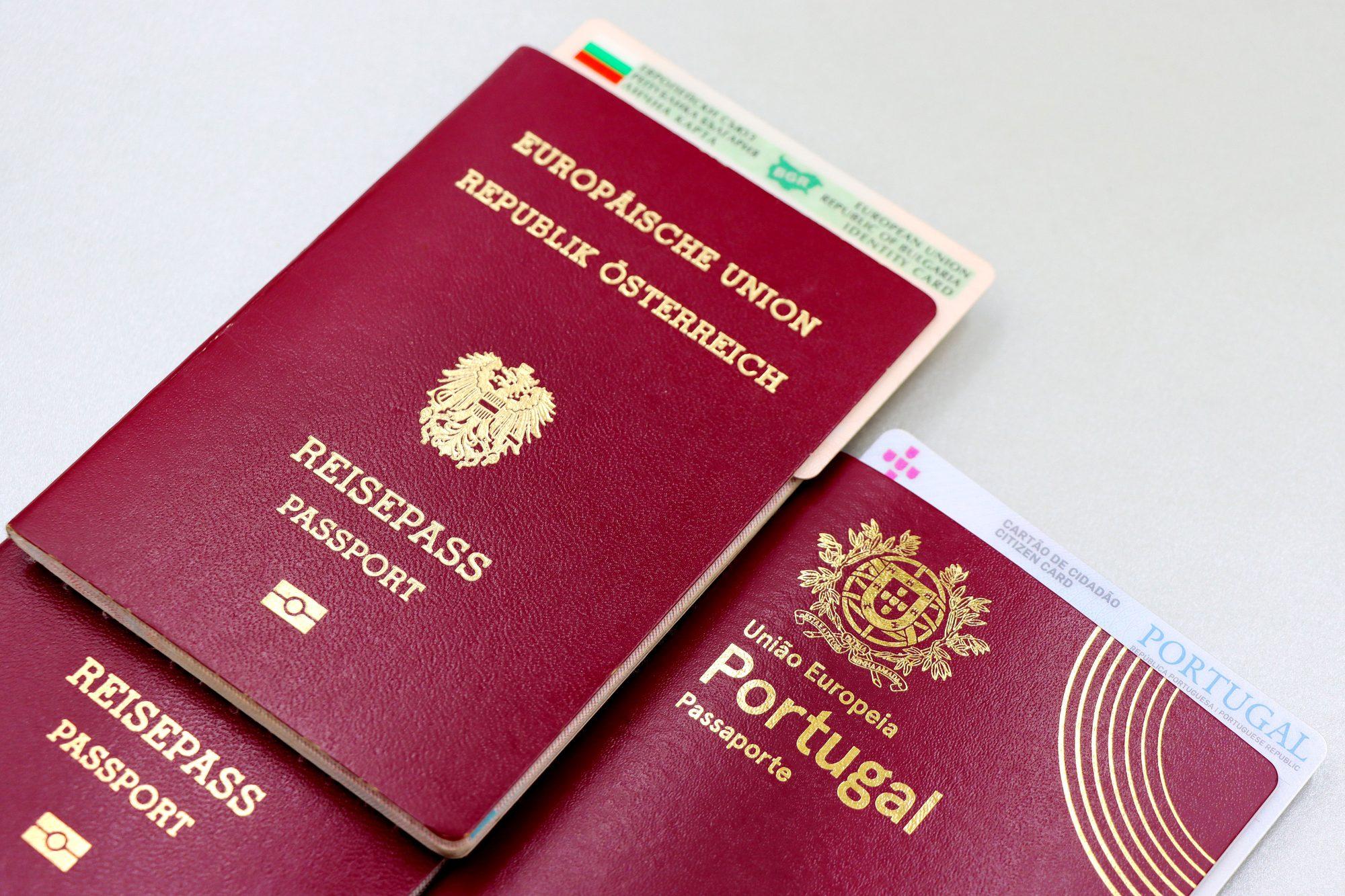
For Familieretshuset, the Danish Agency of Family Law, your British partner is no longer an EU citizen. They therefore need a passport and must show that they are legally in Denmark on the wedding day. What has stayed the same is how documents are handled: Familieretshuset accepts documents from most European countries without authentication and states expressly that this also applies to documents from the UK (Familieretshuset: Documentation requirements). You only need to translate documents that are not in Danish, English, German, Norwegian or Swedish.
| Topic | Partner from the EU, EEA or Switzerland | Partner from the UK |
|---|---|---|
| ID for the application | passport or national ID card | passport only, with rules on issue date and validity |
| Visa | no | no, up to 90 days in 180 days |
| Proof of stay | not needed | residence permit from a Schengen state or EES printout with plane tickets or boarding passes |
| Apostille on documents | no | no |
| Translation | only for documents in other languages | not needed for documents in English |
Is the British passport enough? The 10-year rule
For travel to the Schengen area, the UK government sets two conditions (GOV.UK: Denmark, Entry requirements):
- Date of issue: less than 10 years before the day you enter. If the passport was renewed before 1 October 2018, according to gov.uk its date of issue may be more than 10 years ago even though it has not yet expired.
- Expiry date: at least 3 months after the day you plan to leave the Schengen area.
For the application, Familieretshuset sets similar requirements for the passports of citizens from outside the EU, the EEA and Switzerland: issued within the last 10 years, valid at least 3 months beyond the stay and with 2 empty pages. If the passport expires before the approval does, the approval (prøvelsesattest) also ends earlier; otherwise it is valid for 4 months from issue.
If your partner also holds Irish citizenship, they can use the Irish passport and count as an EU citizen. The rules for partners from the EU then apply to them, that is, without proof of stay.
Entry: visa-free, with EES, but no ETIAS yet
British citizens travel to Denmark visa-free, for up to 90 days in any 180-day period. However, Denmark only marries people who are legally in the country on the wedding day, and Familieretshuset already checks this when you apply (Familieretshuset: Legal residence for marriage in Denmark). This is how your partner proves the stay:
- Without a residence permit: since 10 April 2026, with a printout of the data page and the result page of the EU's EES calculator, plus plane tickets or boarding passes (Familieretshuset: Documentation of legal stay). With the Entry/Exit System (EES) there are no more passport stamps; according to the UK government, an EES record is valid for 3 years.
- Living in Germany, Austria or Switzerland: Familieretshuset expressly names a residence permit from a Schengen state as proof. In Germany, British citizens covered by the Withdrawal Agreement have the residence document Aufenthaltsdokument-GB for this (§ 16 FreizügG/EU); upload both sides of it.
And ETIAS? The planned travel authorisation for visa-free travellers is not yet in operation. The EU has announced that it will publish the start date several months in advance, and until then travellers do not need to do anything (EEAS: Information on ETIAS). We did not find a start date on the official pages on 6 November 2026. How the EES proof works step by step is explained in our guide EES proof for the wedding. If you travel by car, ferry or train, ask beforehand what Familieretshuset accepts instead of plane tickets; its list only names tickets and boarding passes.
Which British documents do you need?
Apart from the online application, you usually need very little. Unmarried applicants confirm their marital status in the application with their signature under criminal liability; Familieretshuset asks for a certificate of marital status only in individual cases, and never for your own birth certificates. British documents are added only if your case needs them:
| Document | When needed | Note |
|---|---|---|
| Passport | always | colour photos of all pages, mind the 10-year rule |
| Proof of stay | always | residence permit from a Schengen state or EES printout with tickets |
| Decree absolute or final order | after a divorce in England or Wales | decree absolute for divorce applications made before 6 April 2022, final order for applications made from that day on |
| Extract of the divorce (extract decree) | after a divorce in Scotland | for divorces from 1984 onwards via the National Records of Scotland, older ones via the Court of Session |
| Decree absolute | after a divorce in Northern Ireland | copy via the Department of Justice Northern Ireland |
| Death certificate | if widowed | death certificate of the former spouse |
| Birth certificates of joint children | if you have children together | without apostille |
| Proof of your joint address | if you live together outside Denmark | not older than 4 months |
None of these British documents needs an apostille, and documents in English need no translation either. You also do not need a British Certificate of No Impediment for Denmark, because Familieretshuset checks the conditions for marriage itself. If it does exceptionally ask for proof of marital status, ask what it accepts: according to an information note from the British Embassy in Berne, the register offices in England and Wales, Scotland and Northern Ireland do not issue certificates of marital status (FCDO: Informative Note Marriage).
British divorce: only the final order counts
A divorce in England and Wales has two steps. After the conditional order (formerly decree nisi) the marriage still exists; according to the UK government, a person is only divorced and free to marry again with the final order or decree absolute (GOV.UK: Finalise your divorce). There are at least 43 days between the two steps. The UK government advises keeping the document safe, because you will need it if you marry again. If it has been lost, for England and Wales you apply to the court responsible for a copy (GOV.UK: Copy of a decree absolute or final order). For Scotland you order the extract of the divorce, depending on the year, from the National Records of Scotland or the Court of Session (Scottish Courts: Questions about divorce).
For Familieretshuset, the British proof of divorce is enough. More on earlier marriages is in our guide divorced: a second wedding in Denmark.
Is the Danish marriage valid in the UK?
As a rule, yes. The UK government states that a marriage abroad is recognised in the UK if it was legal in the country where it took place and would be allowed under UK law (GOV.UK: Getting your marriage certificate). The information note of the UK Foreign Office (FCDO) explains the logic behind this: the form of the marriage is governed by the law of the place of the ceremony, the capacity to marry by the law of each partner's domicile. Only the courts can decide this with binding effect; British embassies do not confirm the validity of a foreign marriage (GOV.UK: Recognition of foreign marriage letters).
You cannot register the marriage in the UK. Only marriages that took place in the UK are registered there, and there is no UK marriage certificate for a marriage abroad. Your proof is the international marriage certificate, which you receive in two copies straight after the ceremony and which includes English among other languages. For Scotland, the Scottish Government likewise states that marriages outside Scotland are not entered in the Scottish registers; in some circumstances you can have them recorded in the Book of Scottish Connections of the National Records of Scotland (mygov.scot: Marriage outside of Scotland).
The UK government pages we checked do not require an apostille for recognition. If you need the certificate in a country outside the EU, the Danish Ministry of Foreign Affairs issues the apostille for DKK 250, see apostille on the Danish marriage certificate. What you report in Germany, Austria and Switzerland is explained in our guides on recognition in Germany, Austria and Switzerland, and all other countries in the overview recognition of the Danish marriage worldwide.
After the wedding: where may you live together?
Marriage does not automatically give either of you a right of residence in the other's country. Which rules apply depends on where you want to live. We do not advise on immigration law; the table summarises what the authorities themselves state (as of 6 November 2026):
| You want to live in | What applies according to the authority |
|---|---|
| The UK, with the EU partner moving there | as a rule, a partner visa (GOV.UK: Family visa, partner): a marriage recognised in the UK, a combined income of at least £29,000 a year (GOV.UK: Proof of income) and English at least at level A1 (GOV.UK: Knowledge of English) |
| Germany, with a German partner | national rules: residence permit as the spouse of a German (§ 28 AufenthG); British citizens may enter visa-free for this and apply for the permit within 90 days of entry (§ 41 AufenthV) |
| An EU country whose citizenship the EU partner does not hold | EU free movement: the British spouse can join the EU partner and applies for a residence document within 3 months of arrival (Your Europe: Non-EU spouses) |
| The EU partner's home country | national rules only, unless you previously lived together in another EU country (Your Europe) |
| Austria or Switzerland | their own national rules; ask the settlement authority (Niederlassungsbehörde) in Austria or the cantonal migration office in Switzerland |
If your British partner already lives in Germany with an Aufenthaltsdokument-GB, ask the immigration office (Ausländerbehörde) whether the marriage changes anything. How joining a spouse with a visa generally works is explained in our guide family reunification after the wedding in Denmark; you sort out your surname at home afterwards, see changing your name after the wedding.
Are you both British and living in the UK?
That works too. The rules for citizens from outside the EU then apply to both of you: a passport that meets the 10-year rule, the EES printout with tickets as proof of stay and British documents without an apostille. Because you live together outside Denmark, you also need proof of your joint address, not older than 4 months. Familieretshuset does not say on its pages which British document it accepts for this; clarify that before you apply. At home, the marriage is valid under the rules above, and there is no registration in the UK. Why Denmark is possible even without living there is explained in our guide marrying in Denmark without residence.
Step by step
- Check the passport: date of issue and expiry date; if necessary, apply for a new passport first.
- Clarify the documents: only the ones you need, for example a final order or decree absolute. Our free eligibility check shows what your case needs.
- Application to Familieretshuset: the fee is DKK 2,100 (about €281) and is not refunded. Familieretshuset usually decides complete applications within 5 working days; after a request for more documents, it is currently working on applications from August 2026 (as of 6 November 2026).
- Travel and ceremony: have the EES printout and tickets ready. The ceremony takes 15 to 20 minutes; you need two witnesses, and many municipalities provide them on weekdays.
- Afterwards: with the international marriage certificate you report the marriage wherever necessary, for example in Austria or Switzerland; in the UK there is nothing to register.
What else binational couples should keep in mind is in a separate guide. If you would rather not check the documents alone: in the Complete package for €649.99, Familieretshuset's fee included, we check every scan before submission and file the application for you. The Essential package for €249.99 includes the document list, instructions and WhatsApp support. All services are on our pricing page.