
Ærø (in English often written Aeroe or Aero) is a Danish island about 30 kilometres long in the South Funen Archipelago, and you can only reach it by ferry. The municipality has married couples here since 2008, most of them at the town hall in Ærøskøbing. According to its Danish page, it offers a date within 10 weeks of the approval (as of 12 October 2026). What it says about the ceremony day, and what it doesn't, follows below.
Ærø at a glance
| Topic | As of 13 November 2026 |
|---|---|
| Place | usually the town hall in Ærøskøbing (Statene 2); many couples also marry at a place outdoors |
| Date | according to the municipality's Danish page, within 10 weeks of the approval; the German and English pages still say 7 to 8 weeks |
| Booking | by email to info@weddinginfo.dk, no online system |
| Wedding team | Monday to Friday 9:00 to 15:00, phone +45 63 52 50 00 |
| Fee | none at the town hall; DKK 2,100 (about €281) to Familieretshuset |
| Ceremony times, Saturdays, witnesses, language | not published by the municipality, ask by email |
| Ferry | 55 to 75 minutes, from Svendborg, Faaborg or Fynshav |
| Ferry fare, one way | DKK 68 per adult, DKK 142 for a car under 6 metres (valid until 4 January 2027) |
| On the island | the bus is free all year |
How the ceremony day works on Ærø
First, a word of warning: on its pages, the municipality explains how to book and where most couples marry. It says nothing about times, weekdays, witnesses, language, guests or IDs.
Date and weekdays
The municipality cites more than 200 possible wedding days a year. It does not say which weekdays they fall on or at what times ceremonies take place. The wedding team can be reached Monday to Friday from 9:00 to 15:00; those are office hours, not ceremony times. None of the municipality's three pages mentions Saturday dates. If you want a Saturday, ask for one explicitly before you book the ferry and hotel. Where municipalities officially offer Saturday ceremonies is shown in our overview of Saturday and beach weddings.
The language versions differ on the waiting time: the Danish page, last changed on 12 October 2026, gives a date within 10 weeks. The German and English pages, both dated 21 May 2026, still speak of 7 to 8 weeks after the approval. We go by the newer Danish figure.
Witnesses
Under Danish law, every ceremony needs at least two witnesses. If you bring none, the municipality must provide them, according to the citizens' portal borger.dk. Whether Ærø does so at every ceremony, and whether and by when you must register your own witnesses, the municipality does not publish. Ask about both in your first email. How other municipalities handle it is covered in our guide to witnesses.
Language
Ærø names no ceremony language. Check with the wedding team which language the ceremony will be in. If one of you doesn't understand it, you need an interpreter.
ID documents
Ærø does not say when and where you show your passports or ID cards. Other municipalities set fixed deadlines: Copenhagen, for example, wants to see them at City Hall at the earliest 5 working days and at the latest the day before the ceremony (see our Copenhagen guide). So ask whether you need to come in the day before or whether the ceremony day is enough. Either way, bring the passports you submitted to Familieretshuset.
Guests
The municipality publishes nothing on guest numbers or on taking photos during the ceremony. Give your number of guests in your email and ask whether the room is big enough.
Place: town hall or outdoors
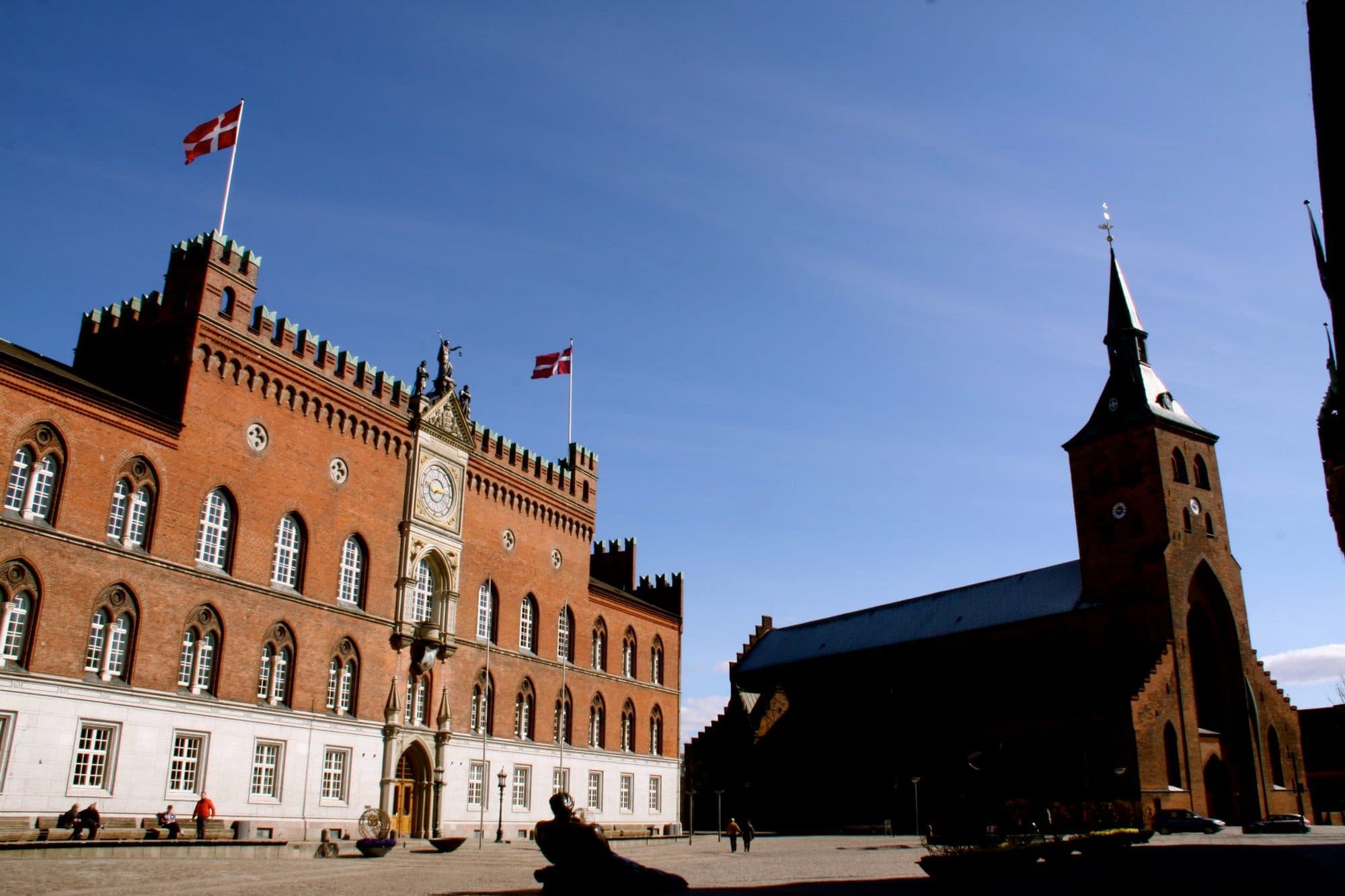
Most couples marry at the town hall in Ærøskøbing, right in the old town. According to the municipality, many also marry at a scenic place on the island outside the town hall. It does not say which places these are or what they cost. The citizens' portal borger.dk explains the rule behind it: ceremonies usually take place at the town hall, but the mayor can allow another place, such as a forest or park.
The tourist office VisitÆrø suggests the beaches along the roughly 80 kilometres of coast, the Voderup Klint cliffs and the nature areas Næbbet and Vitsø near Søby. A ceremony in the Skjoldnæs lighthouse is arranged through a private wedding planner, according to VisitÆrø. For a place outside the town hall, a municipality may only charge the actual extra costs; more on this in our guide getting married at special places.
After the I do
According to borger.dk, you are handed your marriage certificate (vielsesattest) straight after the ceremony. The general course of the day is described in our guide the ceremony in Denmark: how the day works. All of the municipality's rules in short are on our page Getting married on Ærø.
Booking your date: by email, not online
There is no online booking system. Once you have decided on Ærø, write to info@weddinginfo.dk with your names, contact details and, if you have one, your preferred date; the municipality then reserves the date for you. You can do this even before you apply. You apply to Familieretshuset (Agency of Family Law) and name Ærø as the municipality where you want to marry. After the approval, Familieretshuset sends the certificate to the municipality and a confirmation to you. The wedding team then confirms the final date by email.
The municipality says it cannot advise on which documents you need; that is solely Familieretshuset's job. So use your first email for the questions only Ærø can answer: weekday and time, witnesses, language, guests, IDs and, if you have one, your chosen outdoor place.
Since August 2025 there has been no fee for the ceremony at the town hall. The Familieretshuset fee of DKK 2,100 (about €281) is mandatory. You can estimate what your whole trip will cost with our cost calculator.
Getting there: how to reach Ærø
There is no bridge. The ferries of Ærøfærgerne, run by the municipality, sail from three ports:
| Route | Crossing | Good to know |
|---|---|---|
| Fynshav (Als) → Søby | 55 min (60 back) | according to VisitÆrø the fastest way from Germany, on the electric ferry Ellen; booking compulsory for cars and foot passengers; from Søby on to Ærøskøbing |
| Svendborg → Ærøskøbing | 75 min | docks right by the old town; you can also reach Svendborg by train |
| Faaborg → Søby | 60 min | no departures on Saturdays and Sundays from 24 October to 13 December 2026, nor on 24 and 31 December and 1 January |
Foot passengers, groups and cyclists always book and pay in advance. For cars, booking is compulsory from Fynshav and recommended on the other routes. If you are not at the port at least 10 minutes before departure, your booking lapses. According to VisitÆrø, you should book the ferry in advance even outside the high season (summer and Easter). The winter timetable runs from 19 October 2026 to 4 January 2027; some departures are cancelled on 24 and 31 December. On the island, the bus is free all year.
Travel times from Copenhagen, Billund and Hamburg
- Copenhagen Airport: by car, VisitÆrø reckons on about 3 hours including the ferry. By train: from Copenhagen Central Station, DSB says it takes about 2 hours to Svendborg, on the fast InterCityLyn to Odense and then the regional train. Trains to Odense also run from the airport. Add 75 minutes for the ferry.
- Billund Airport: by car, VisitÆrø reckons on about 3.5 hours.
- Hamburg: neither the ferry company nor VisitÆrø gives a travel time. The route crosses the border to Fynshav on Als, and from there the ferry goes to Søby. Check with a route planner and allow a buffer.
All times are approximate. Check your connection with DSB and Ærøfærgerne before you book (see sources).
Hotels and accommodation
Most places to stay are in Ærøskøbing and Marstal. In Ærøskøbing's old town, a few minutes' walk from the town hall, you'll find, for example, Hotel Ærøhus and Pension Vestergade 44, and in Marstal, among others, Hotel Marstal. Prices and availability vary a lot with the season; you'll find current offers at VisitÆrø. In high summer, book as early as possible, ideally together with the ferry.
Ærøskøbing: a short history of the old town
Trade in Ærøskøbing probably goes back to the 12th century. The town charter of 1522 brought the trade monopoly for all of Ærø, but after the island was split between three dukes of Schleswig in 1634 most of it was lost, and Marstal became a rival. The whole island came under the Danish crown in 1749, under Frederik V.
Until 1864 Ærø belonged to the Duchy of Schleswig; the island's yellow, green and red flag dates from that time. In 1864 around 100 ships were registered in Ærøskøbing, after which shipping declined sharply. The town never made the switch to steamships, so it barely grew in the 19th century, unlike most Danish towns.
Today the old town is what stands out. The oldest houses date from the 17th and 18th centuries, around 40 buildings are listed, and in Søndergade alone 61 houses are rated worth preserving. The old post office at Vestergade 42, from 1749, is Denmark's oldest surviving post office building, and the church dates from 1758. On the market square stand two old wells that were used until 1952. According to the Danish encyclopaedia Lex, it is often called "Eventyrbyen", the fairy-tale town, at home and abroad. In 2002 the town received the European heritage award Europa Nostra, according to the municipality for its residents' efforts to keep the medieval town plan intact as a whole.
After the ceremony: five places for photos and a stroll
- Ærøskøbing old town: cobblestones, half-timbering and decorated front doors, a short walk from the town hall to Søndergade and the market square.
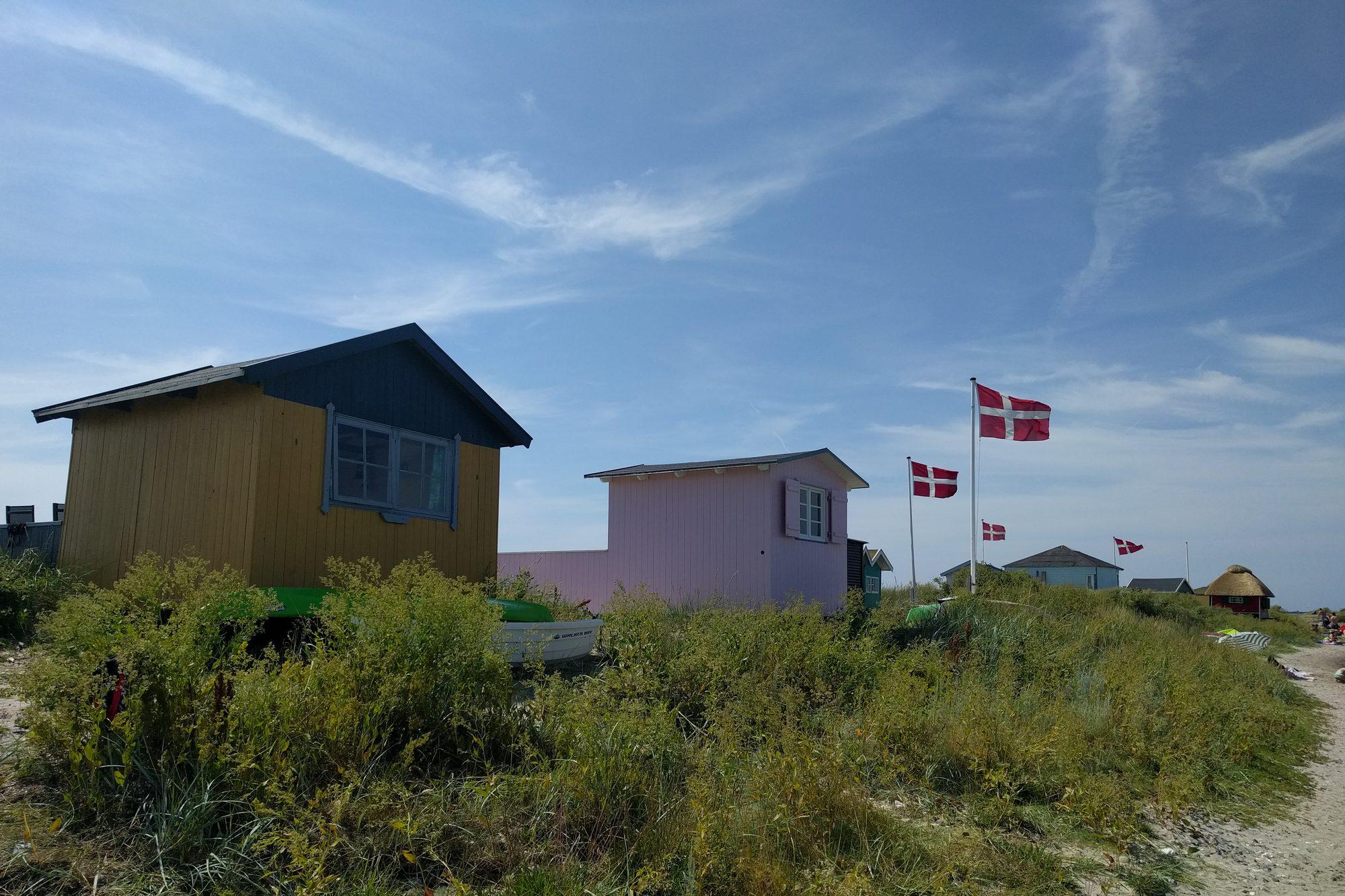
- Beach huts at Vesterstrand: more than 70 colourful huts near Ærøskøbing; the first appeared in the 1920s, and today they count as heritage worth preserving.
- Eriks Hale near Marstal: a spit of land with more beach huts, including the small red one with a thatched roof. The storm surge of October 2023 destroyed almost all the huts here, and locals have been rebuilding many of them since.
- Skjoldnæs lighthouse: a granite tower from 1881 on the north-western tip; according to VisitÆrø you can climb to the top.
- Voderup Klint: 3.5 kilometres of cliffs with wide terraces, protected since 1957, lovely at sunset. Open on foot via the private road and the path; off them only with the landowners' permission.
Weather: when to get married?
| Month | Weather and recommendation |
|---|---|
| May and June | long, light days; a good time for outdoor photos |
| July and August | high season: beautiful, but accommodation and ferries book up early |
| September | quieter, often soft light for photos |
| October to April | cool and windy; ferries may be cancelled in storms, and a thinner timetable applies in winter |
More on seasons and lead times is in our guide when to get married in Denmark.
Three days on Ærø
Plan three days if you can: on the first, arrive, explore the island and, if the wedding team asks for it, show your IDs; on the second, marry and take photos; on the third, relax and travel home. That turns the wedding into a small honeymoon. The car ferry is often booked up early in summer and at weekends; book it as soon as your date is confirmed.
Our free eligibility check shows which documents you need. With the Complete package (€649.99), we submit the application and arrange the date with the wedding team. How Ærø measures up against Copenhagen and Tønder is shown in our comparison of the three places.
Sources and status
- Ærø Municipality: Vielse (Danish, updated 12 October 2026: a date within 10 weeks), Heiraten (German) and Marriage (English), both dated 21 May 2026
- Ærø Municipality: local plan 9-9B for Ærøskøbing old town (Danish, PDF, Europa Nostra award 2002)
- borger.dk: Når I vil giftes (Danish: witnesses, place, certificate)
- Ærøfærgerne: timetables 19.10.2026 to 04.01.2027, fares and foot passengers and groups (German)
- VisitÆrø: getting to Ærø and home page (German), Drømmebryllup på Ærø, Badehusene på Ærø, Top 10 attraktioner and free bus (Danish)
- DSB: Copenhagen to Svendborg (Danish) and Copenhagen to Odense (Danish)
- Lex, Den Store Danske: Ærøskøbing, Ærø, Skjoldnæs Fyr and Voderup Klint (Danish)
- Familieretshuset: processing times (Danish)
- Number of couples in 2025 and 2024 ranking: Dansk Erhverv, 14 February 2026 (Danish)
As of 13 November 2026. Dates, timetables and prices change. Check the current pages before you book.